One villa,
followed all the way down.
A contractor rings the office on a Tuesday about forty-two openings. Eleven weeks later the last frame is signed off and the final certificate goes out. This page is everything in between — ten stops, in order, each shown with the screen the person doing that job actually looks at.
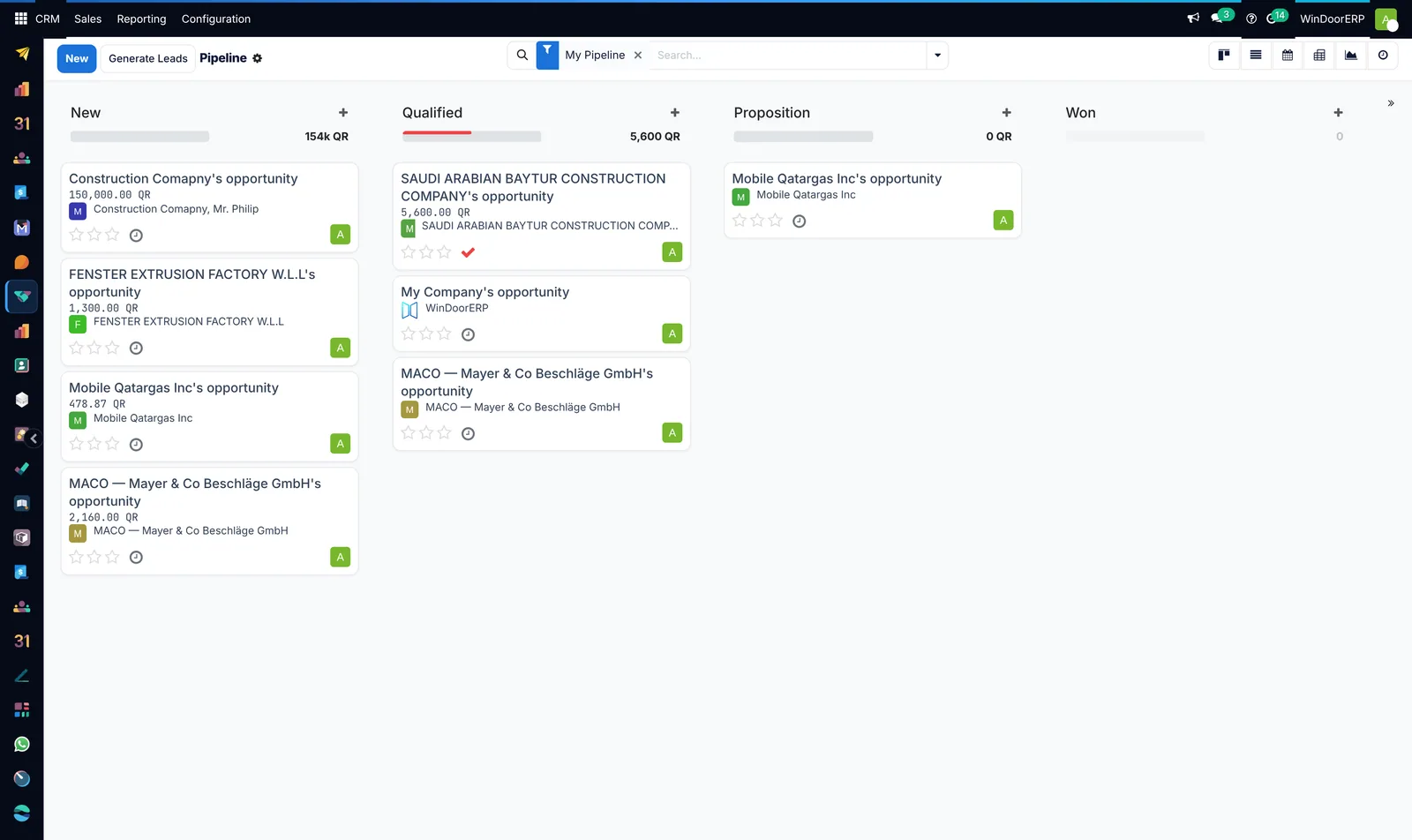
A phone call becomes a project before anybody drives anywhere
Whoever picks up types the contractor's name and what they want. That becomes an opportunity with an owner, an expected value and a pin on the map. At the same moment the technical side opens its own project, so the survey team can see the job coming instead of hearing about it a week later.
True at the end of stop one
- One customer record that every later stop will reuse
- A survey visit already on somebody's board
- Nothing measured and nothing promised yet
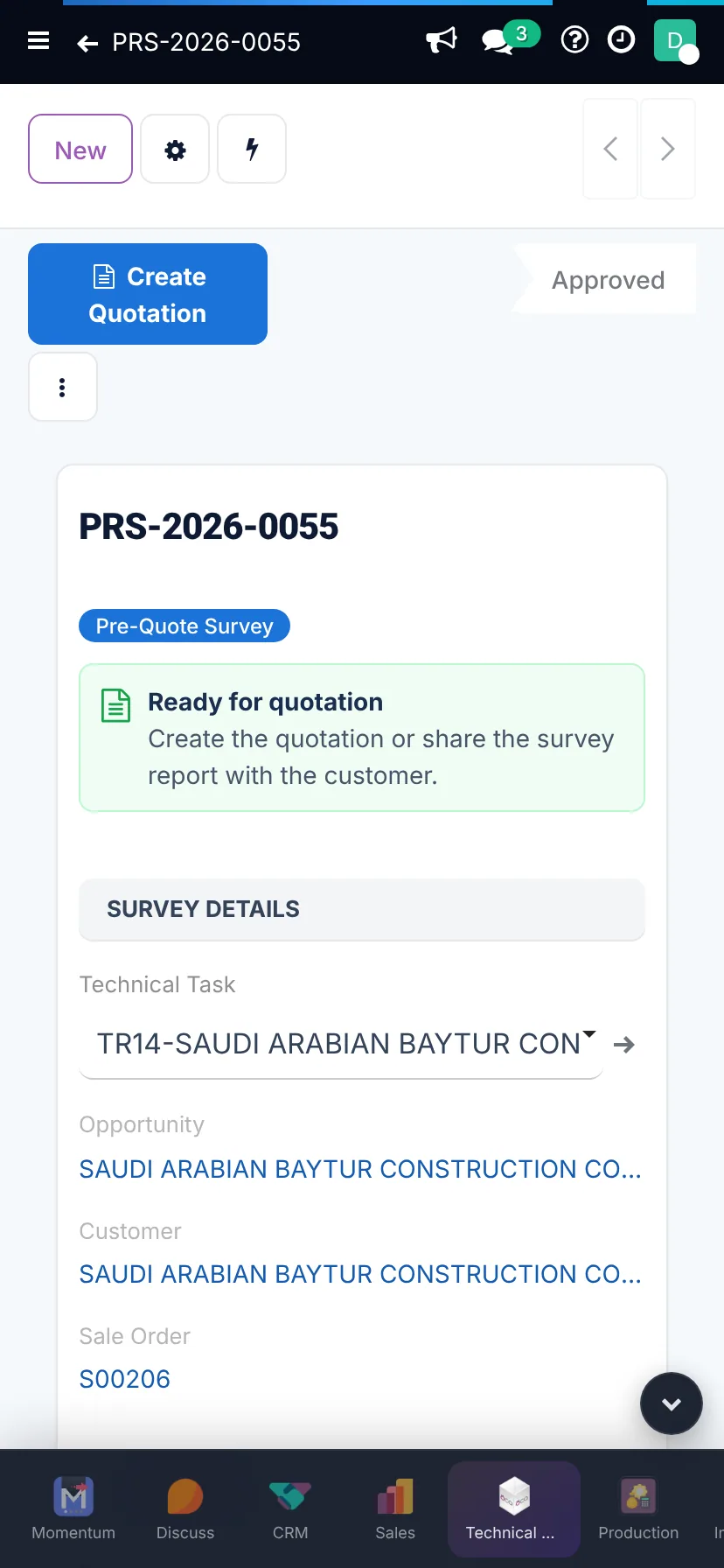
Forty-two openings, captured once, by the person standing in front of them
The surveyor opens the job on their phone with the customer already loaded. They work floor by floor: photograph the opening, name the room, choose the type, fire the laser, note the structural detail — arch, obstruction, height from finished floor. It syncs when there is signal and waits when there is not.
The survey is not a document. It is the set of dimensions the next stop draws from, and the baseline every later measurement is compared against.
What nobody has to do that evening
- Copy an address out of an email
- Sort forty-two photos into a folder
- Re-type a page of measurements into a spreadsheet
Laser on the reveal, phone in hand. Worth one afternoon with a camera.
The measurements become units, and the units become quantities
Survey dimensions open in the designer. The estimator draws each unit — frame, splits, sashes, opening directions, glass build-up, hardware series — and saves. Saving is the important part: it runs an analysis over the geometry that classifies every element and measures it from its own shape.
That analysis is the bill of quantities. Nobody typed it, so nobody can mistype it.
What one save produces
- Frame and sash bars cut to length, with mitre angles
- Glass panes with serials, specification and area
- Beads counted per pane, per profile
- Hardware resolved from the series that was chosen
- A price, through whichever rule the pricelist points at
The contractor changes their mind. Twice. Nothing breaks.
The quotation goes out by email or message from the order itself. When the contractor asks for a wider opening in the master bedroom, that is a revision: a new version of the order, with the previous one intact and readable. Compare them side by side — the numbers on both are still the ones the drawings produced.
On confirmation
- The installation project is created from your template
- The final measurement task is raised for the technical team
- Payment terms and any advance are set
- Four counters start at zero on every line: surveyed, produced, delivered, installed
Measure again before you cut anything
Between a sales survey and a plastered opening there is always a difference. The production survey is a second, precision pass, loaded with the confirmed order dimensions, comparing every opening against what was sold. Variance is calculated, not eyeballed, and it either passes the tolerance you set or it flags a revision.
Nothing enters production until this is approved. That single rule is the difference between a re-cut and a re-manufacture.
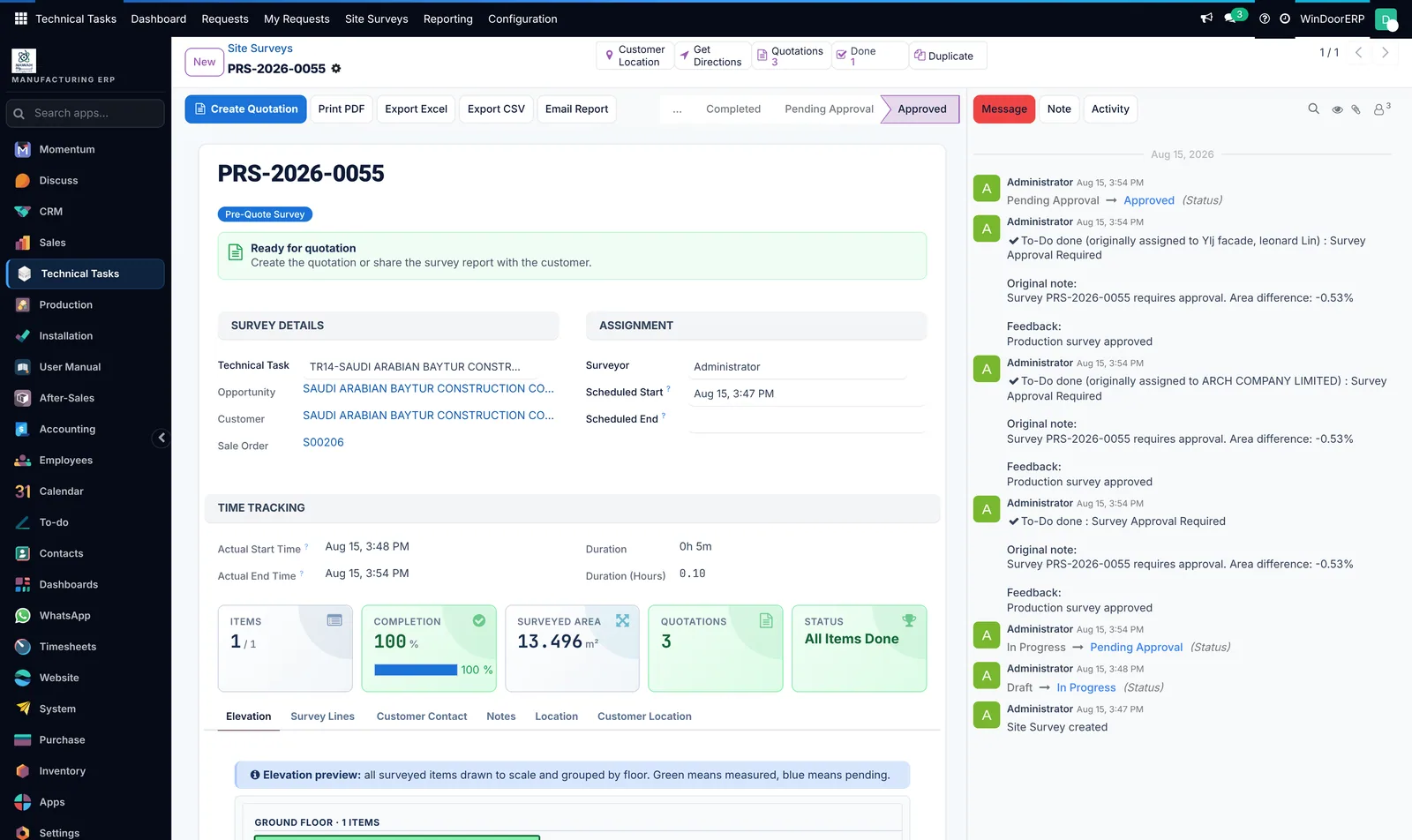
The gate
- Initial versus final compared per opening
- Photo evidence attached where it matters
- Out-of-tolerance openings flagged for revision
- Surveyor sign-off, then approval, then production
Change one number. Everything downstream follows.
Cut, weld, clean, glaze, fit, check, pack
The approved survey becomes a production order carrying every unit. From it the system nests the bars and the glass sheets, reserves stock, raises the work orders along your routing and prints the labels. Cutting plans report their own yield; usable remainders go into off-cut inventory and are offered back on the next plan.
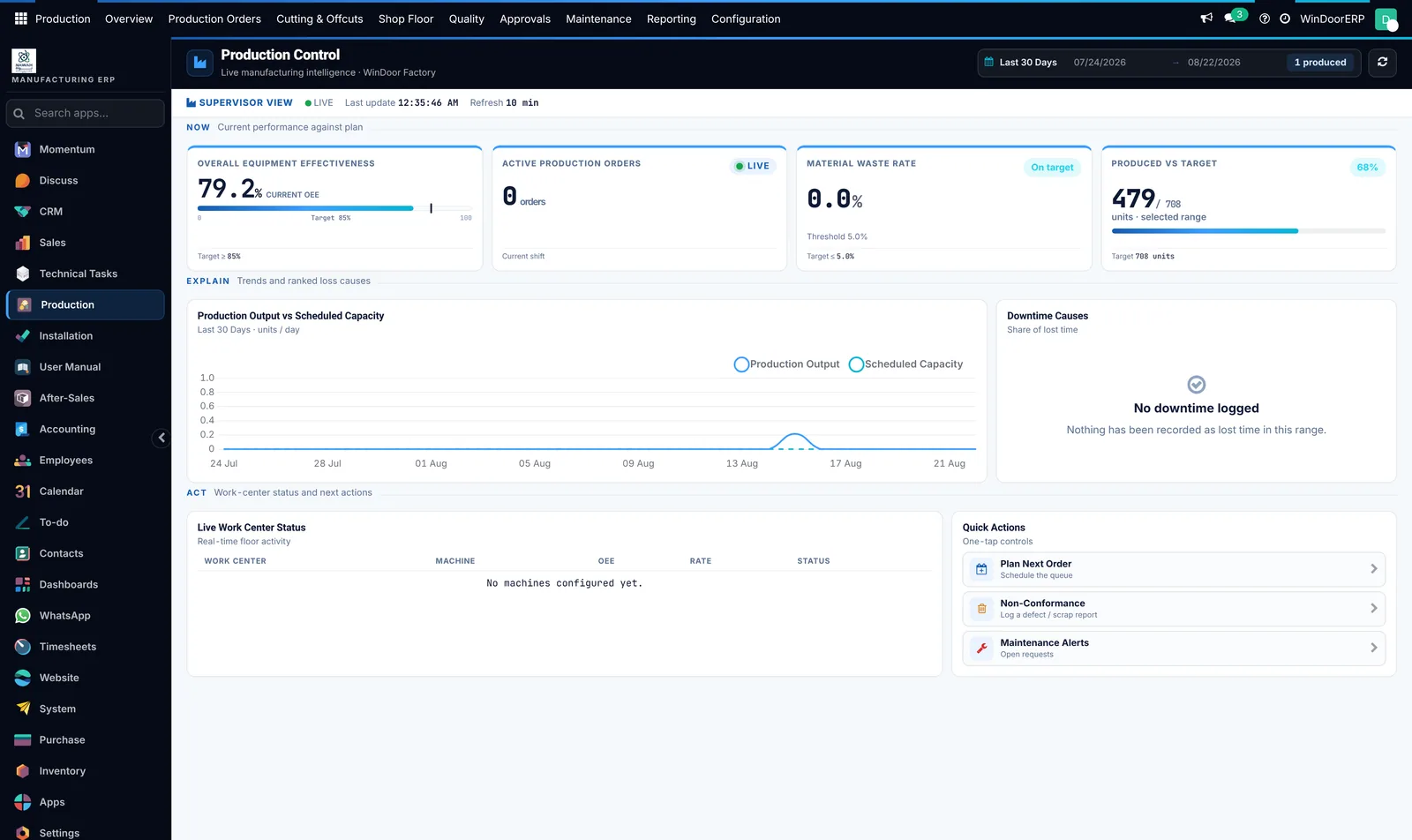
What the floor produces besides frames
- Actual minutes per operation — which is what makes the effectiveness number honest
- A scan history per serial: where every piece is, right now
- Quality results at the gates you configured, blocking dispatch when they fail
- Scrap and rework recorded against a reason, not absorbed silently
Nothing leaves the building without a name on it
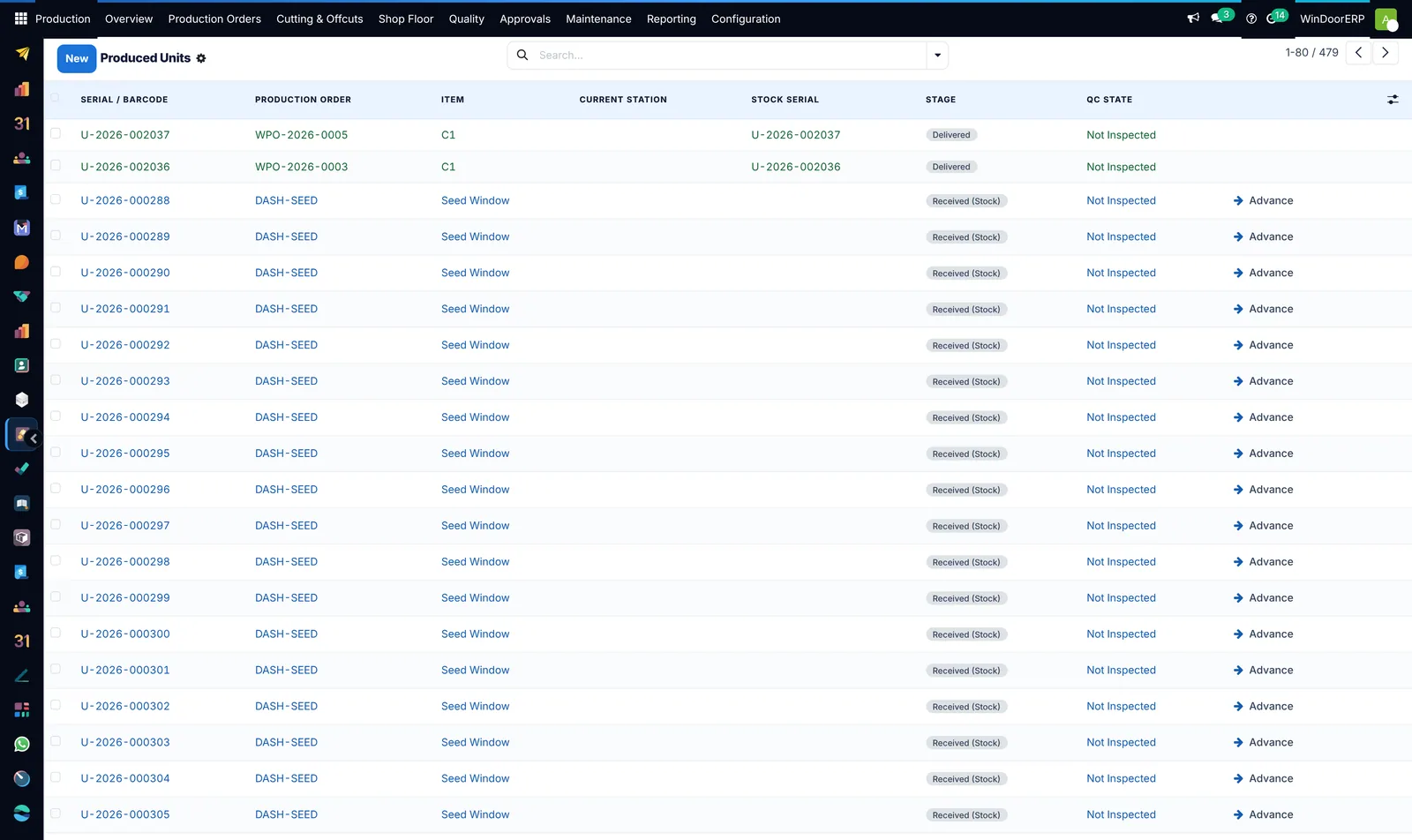
Each finished unit carries a serial and a label that ties the physical frame to the record. The final and pre-dispatch checks run before it is packed. If either fails, the job stops here rather than at the customer's gate — which is the entire point of putting the gate here.
Forty-two units, ticked off one at a time
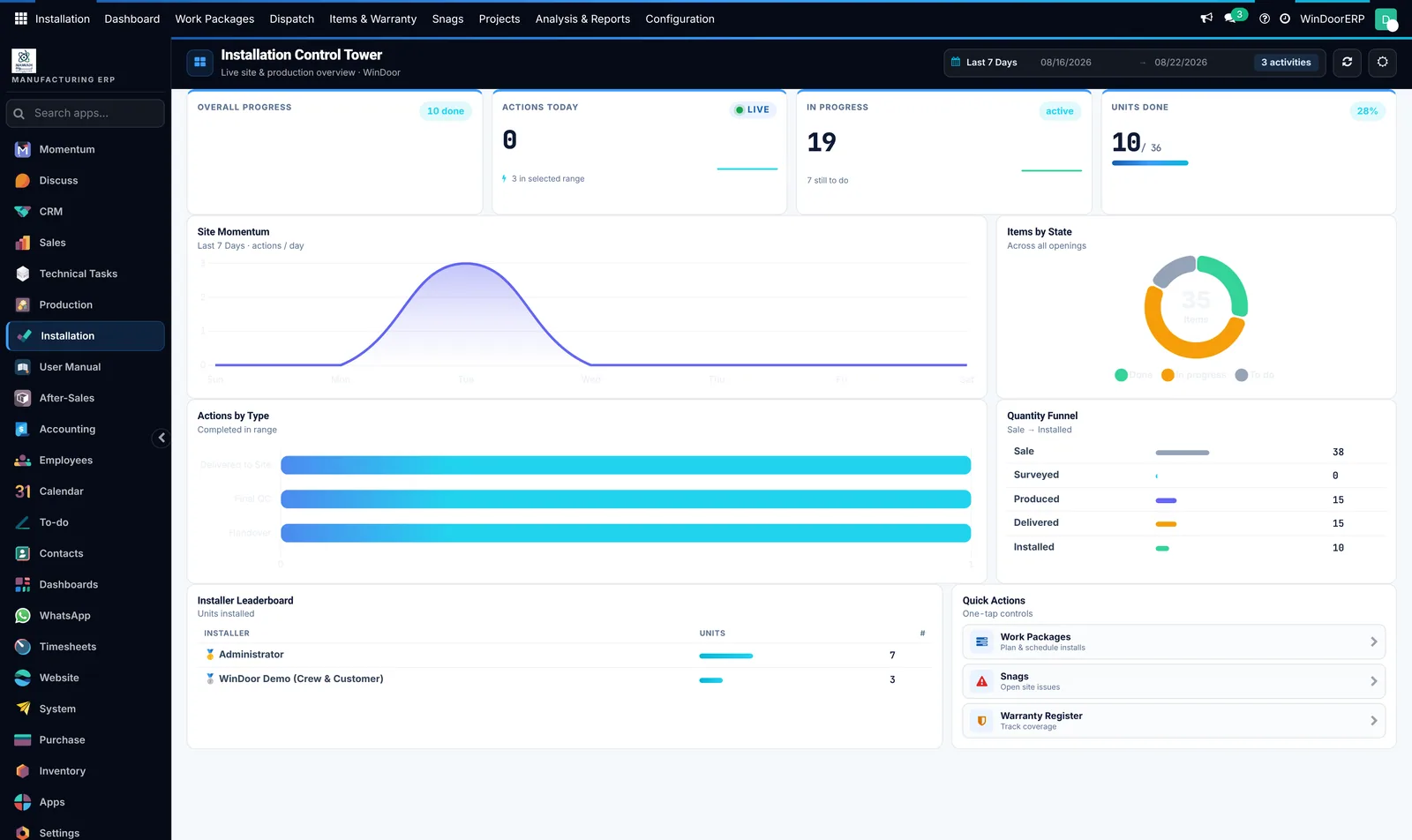
The crew opens their own phone view: the jobs due today, how many units are left on each, which snags are theirs. Each unit walks through the stages you defined — delivered, frame fixed, sash hung, sealed, cleaned — with a photo where the stage demands one, and it keeps working when the site has no signal.
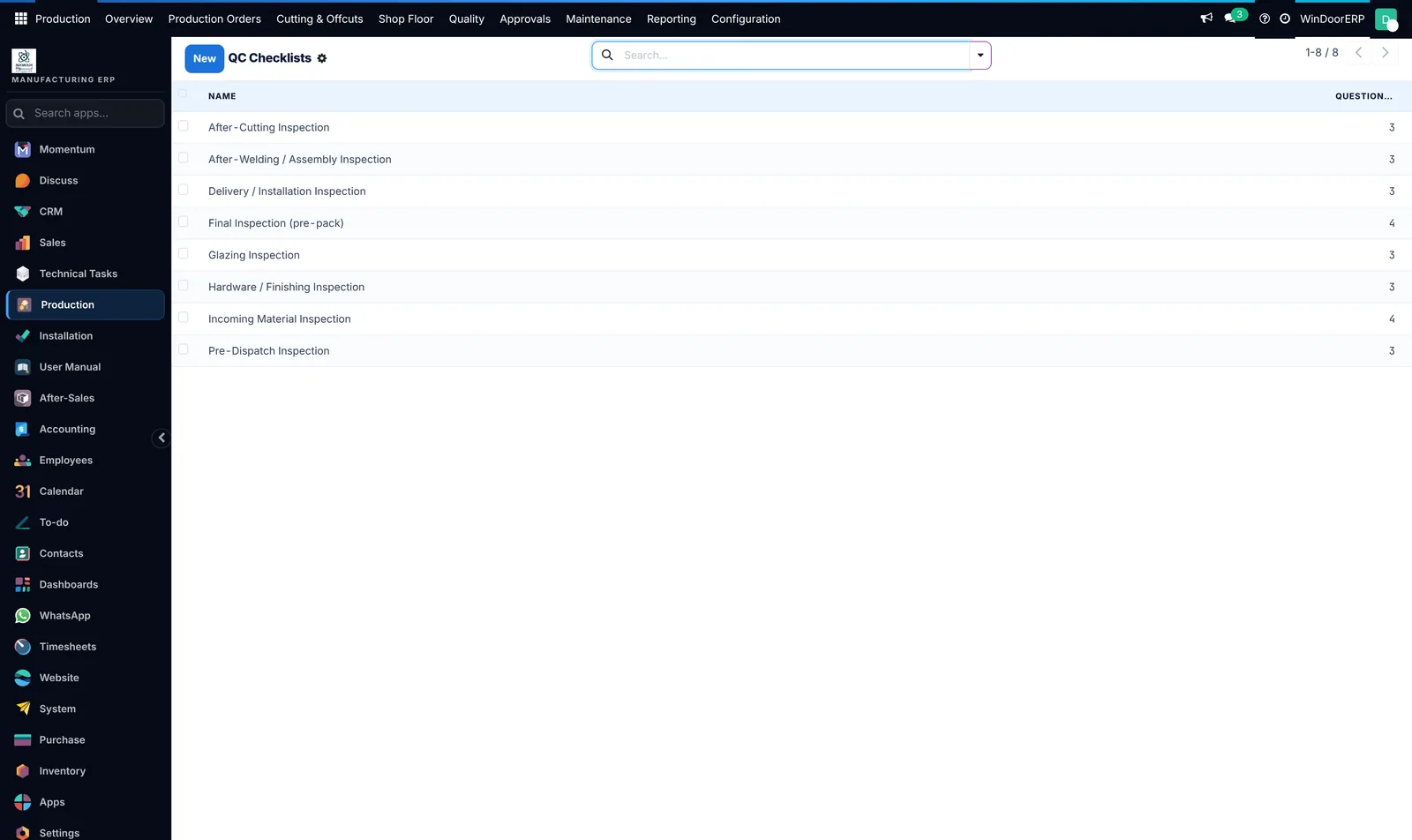
Site checks run against the checklist the office authored. A failed check raises a snag, and an open snag blocks the handover. That is the whole enforcement mechanism, and it is enough.
Bill what was delivered, not what was hoped
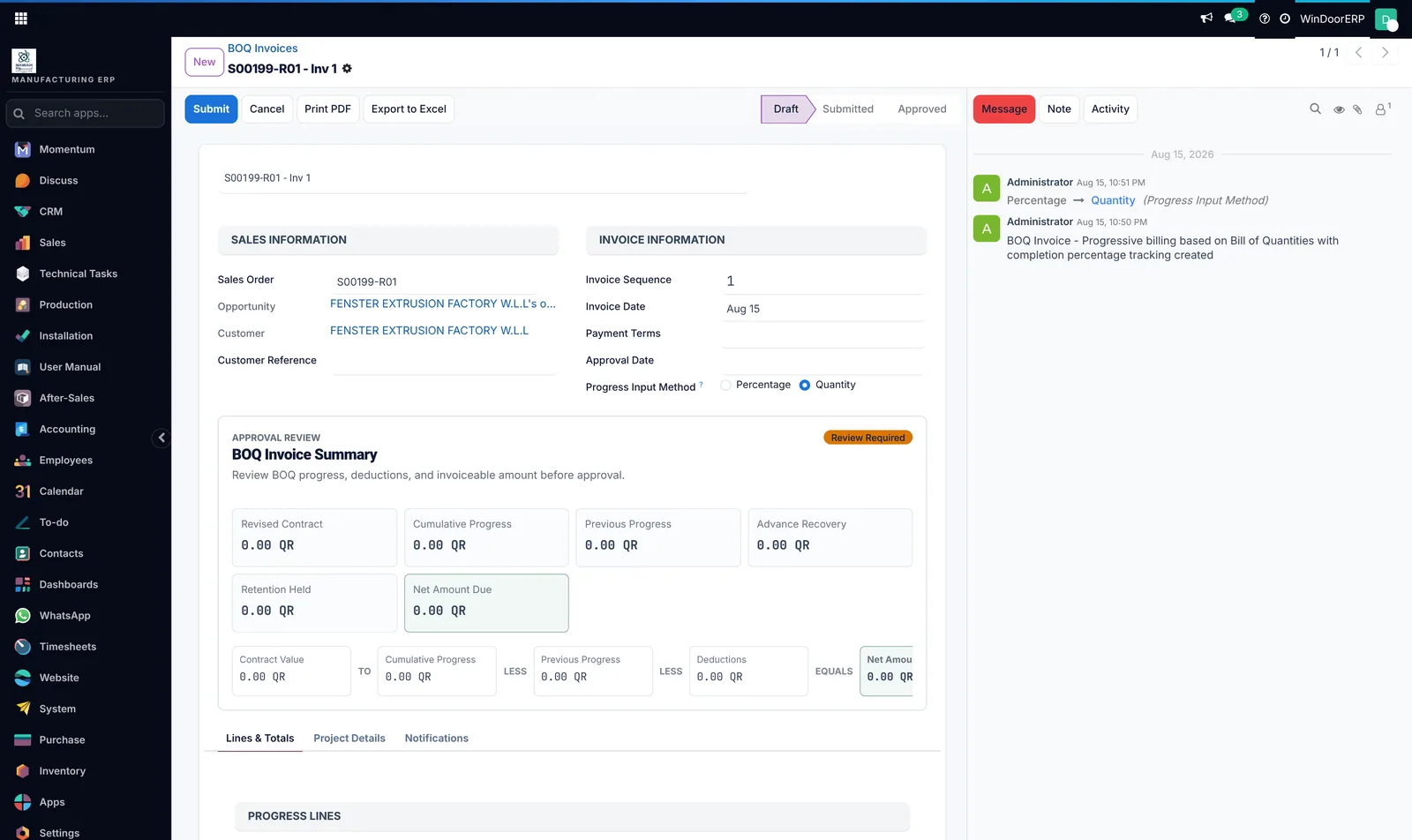
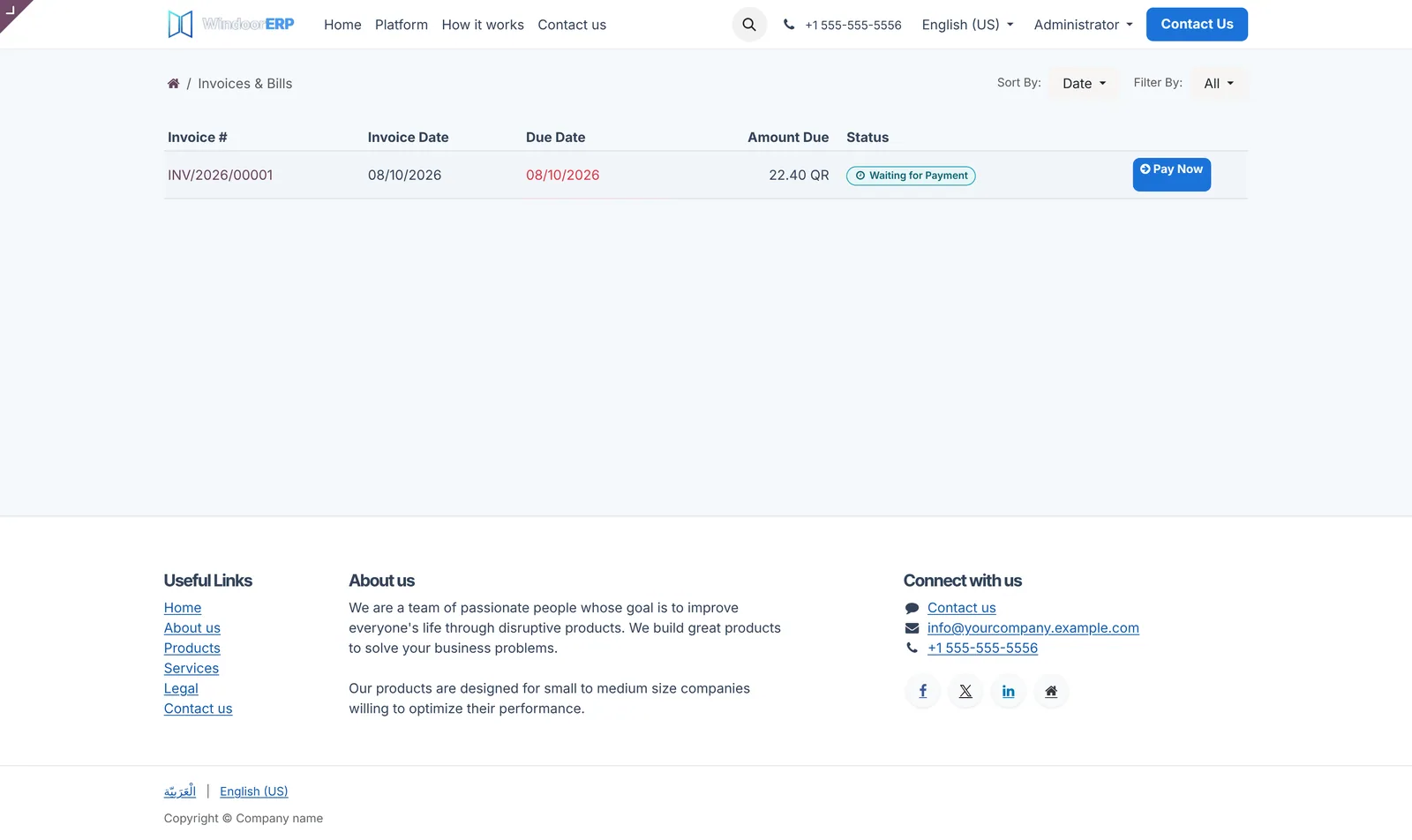
Progress certificates read the same counters the site has been ticking. Cumulative progress against the contract, minus previous progress, minus advance recovery, minus retention, equals the net amount due — arithmetic a main contractor recognises, produced from operational facts rather than from a spreadsheet somebody maintains on the side.
The job is closed. The customer is not.
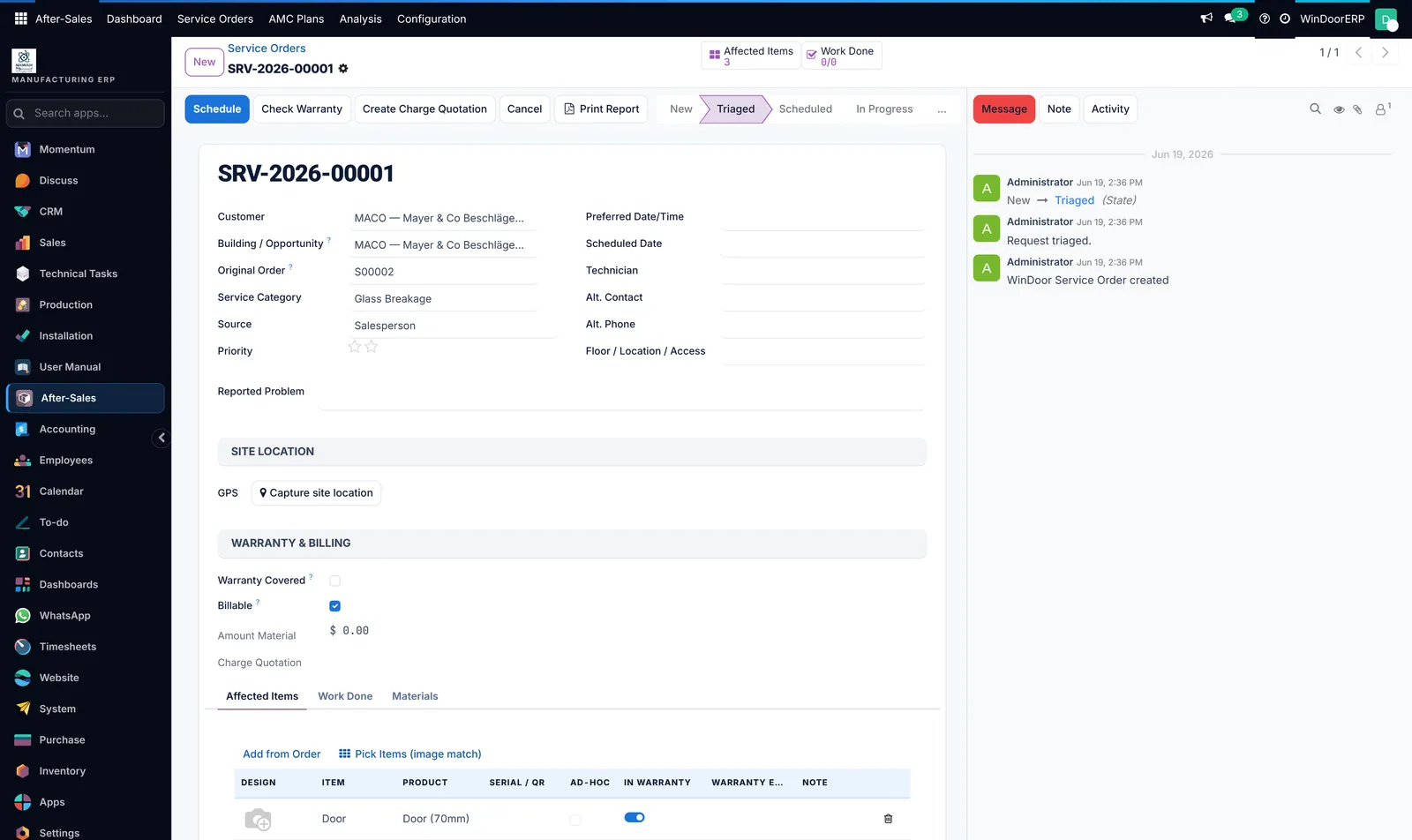
Warranty is registered against each unit serial at handover. When the contractor calls in year three about a stiff handle on the second floor, the service order already knows which frame, which order, which crew fitted it, which hardware set is in it and whether it is covered.
Which is also the next sale
A customer whose windows are on file, whose warranty is tracked and whose technician turns up with the right part is a customer who calls you for the next villa.
Count the handovers that never took place.
Ten stops, six departments, eleven weeks — and not one point where a number was read off one screen and typed into another.
Never re-keyed
The customer, the site, the openings, the dimensions, the quantities, the serials and the delivered counts are each entered once, by the person closest to them, and read by everyone downstream.
Never guessed
Cut lengths come from geometry. Waste comes from the nesting result. Minutes come from the station. Progress comes from the fitter's ticks. Every figure on a report is one that somebody or something actually recorded.
Never lost
Revisions keep their history. Scrap keeps its reason. Snags keep their photograph. Nothing is quietly overwritten to make the current state look tidier than it is.
Stop reading about it.
Open the system.
We will run your own workflow through a live tenant — your profile system, your glass spec, your paper size, your currency — and hand you the mouse. Bring one real job and we will take it from enquiry to invoice in front of you.
45–60 minutes · no slides · run on a real database · English or Arabic