Delivered is
not finished.
This is the stretch where most systems hand you back a spreadsheet and a group chat. Dispatch, fitting, snagging, handover, warranty and the service calls that follow for years — tracked unit by unit, on the phone already in the fitter's pocket.
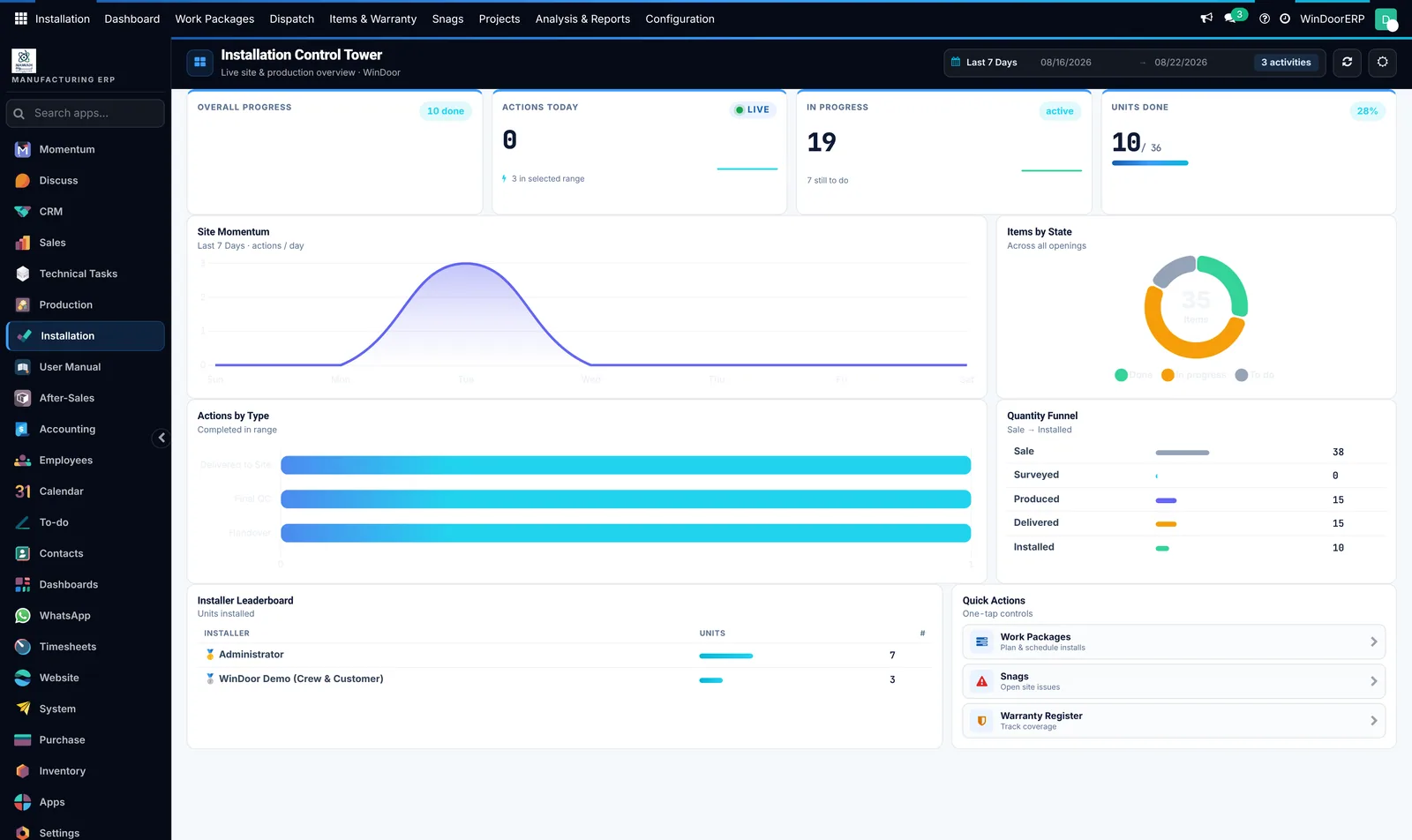
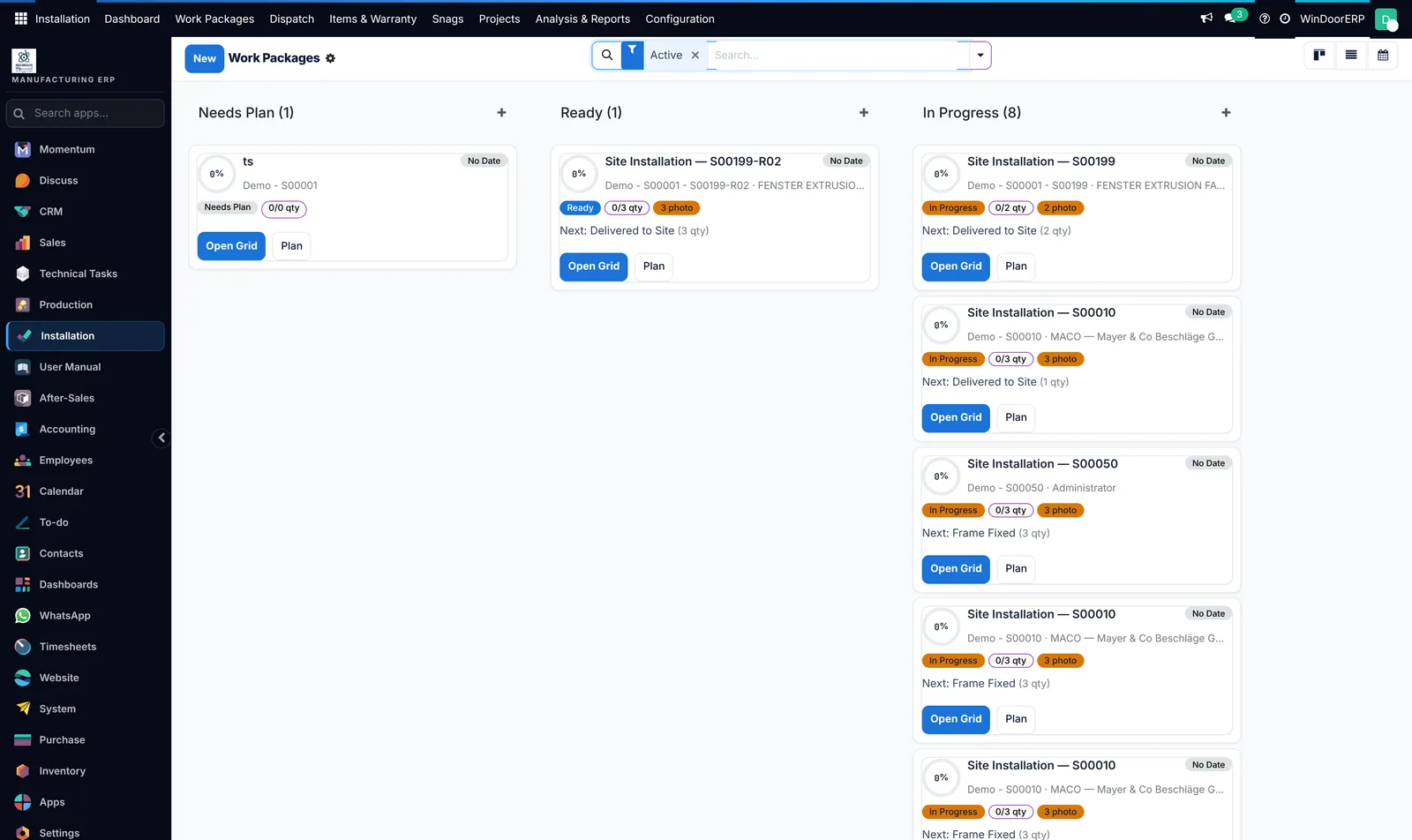
Work packages, not a wall planner.
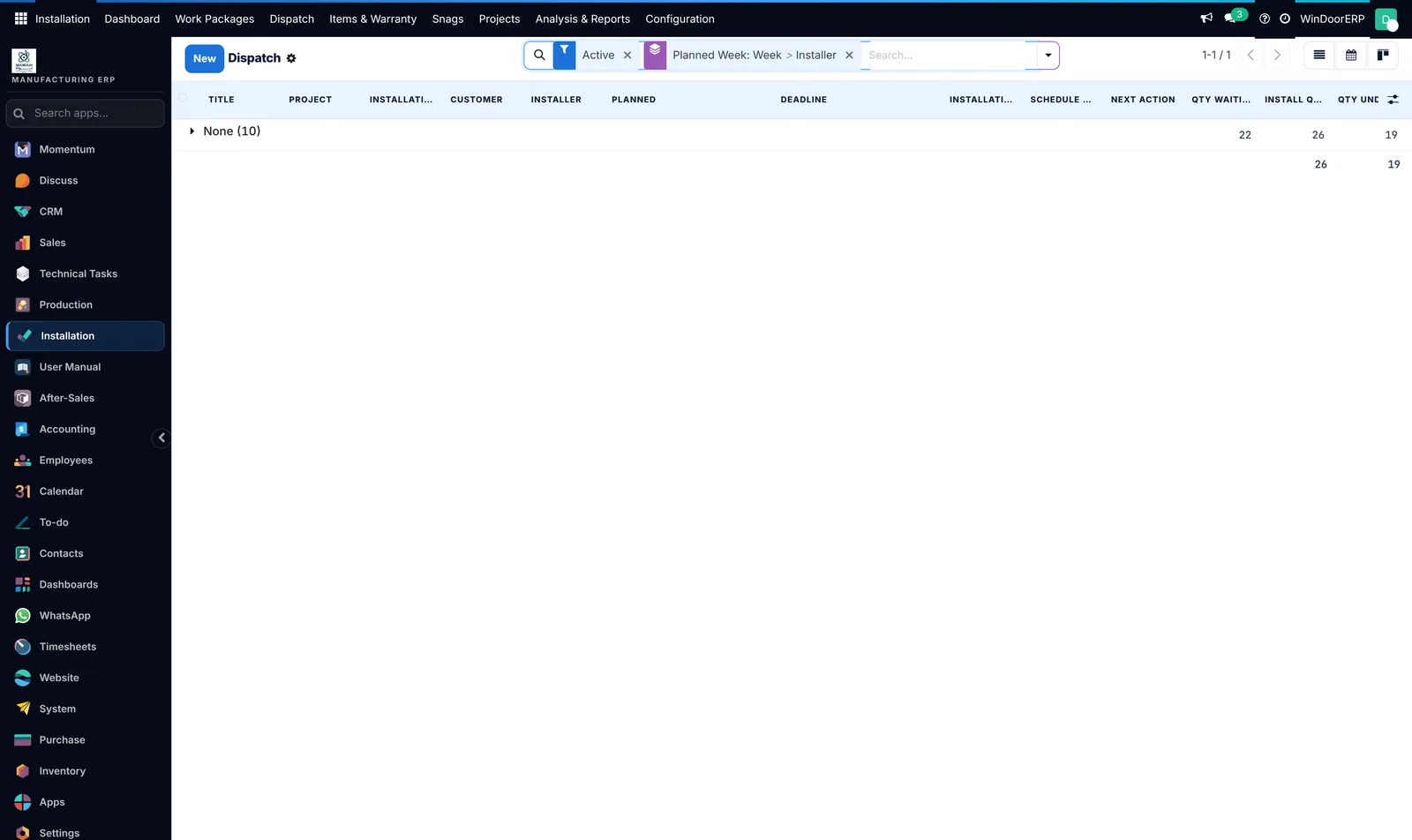
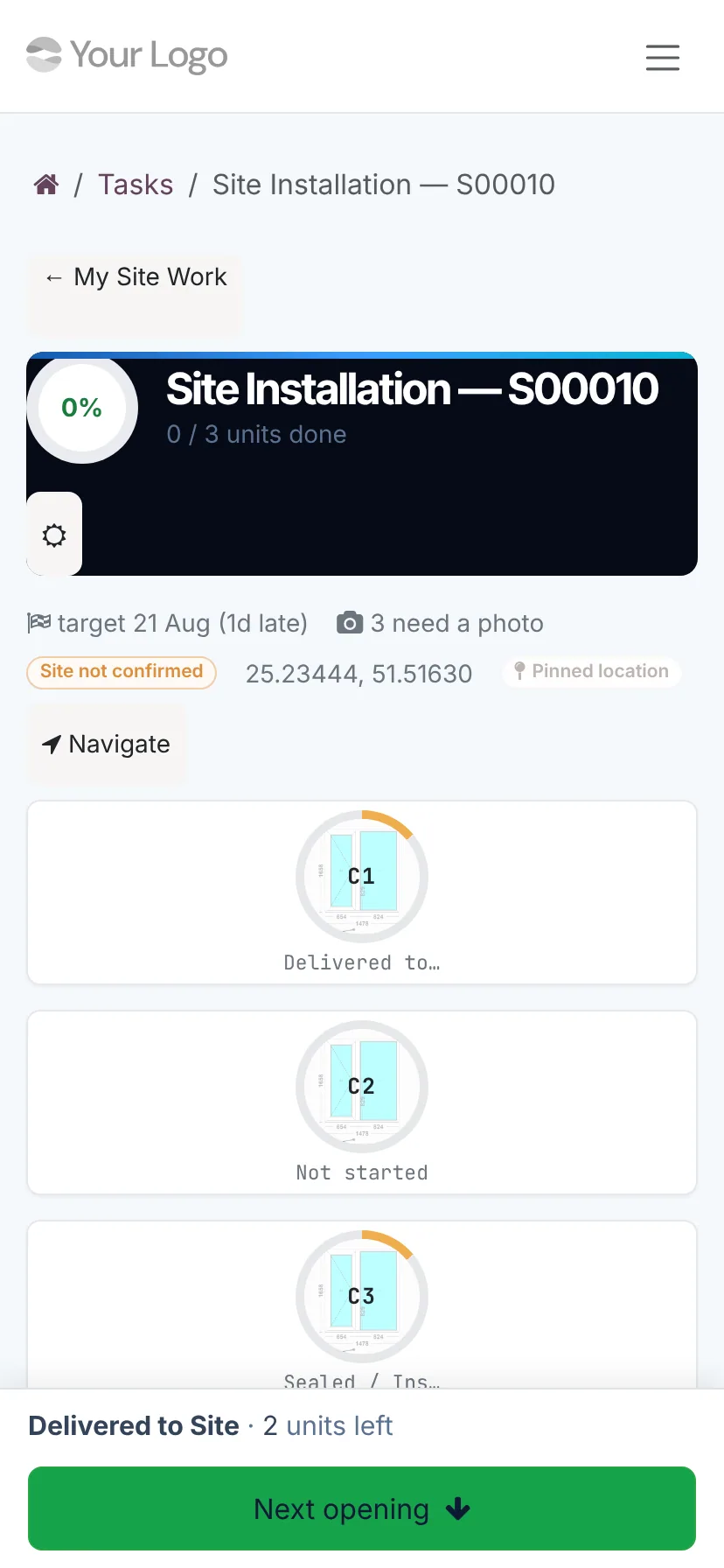
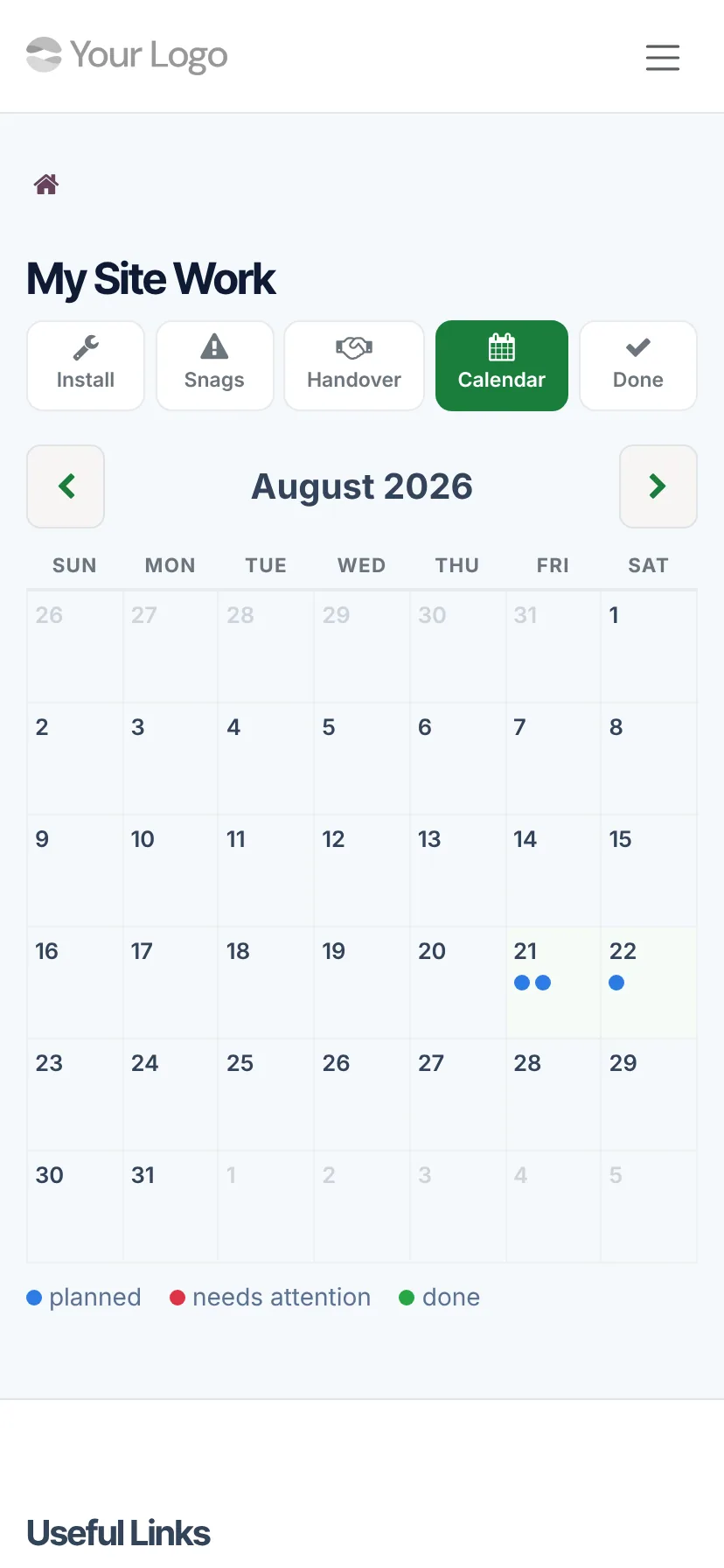
Each site becomes a package that knows how many units it holds, how many are left, and what the next action on it is. Crews are dispatched against it, and the system warns you when the same crew has been promised to two places at once.
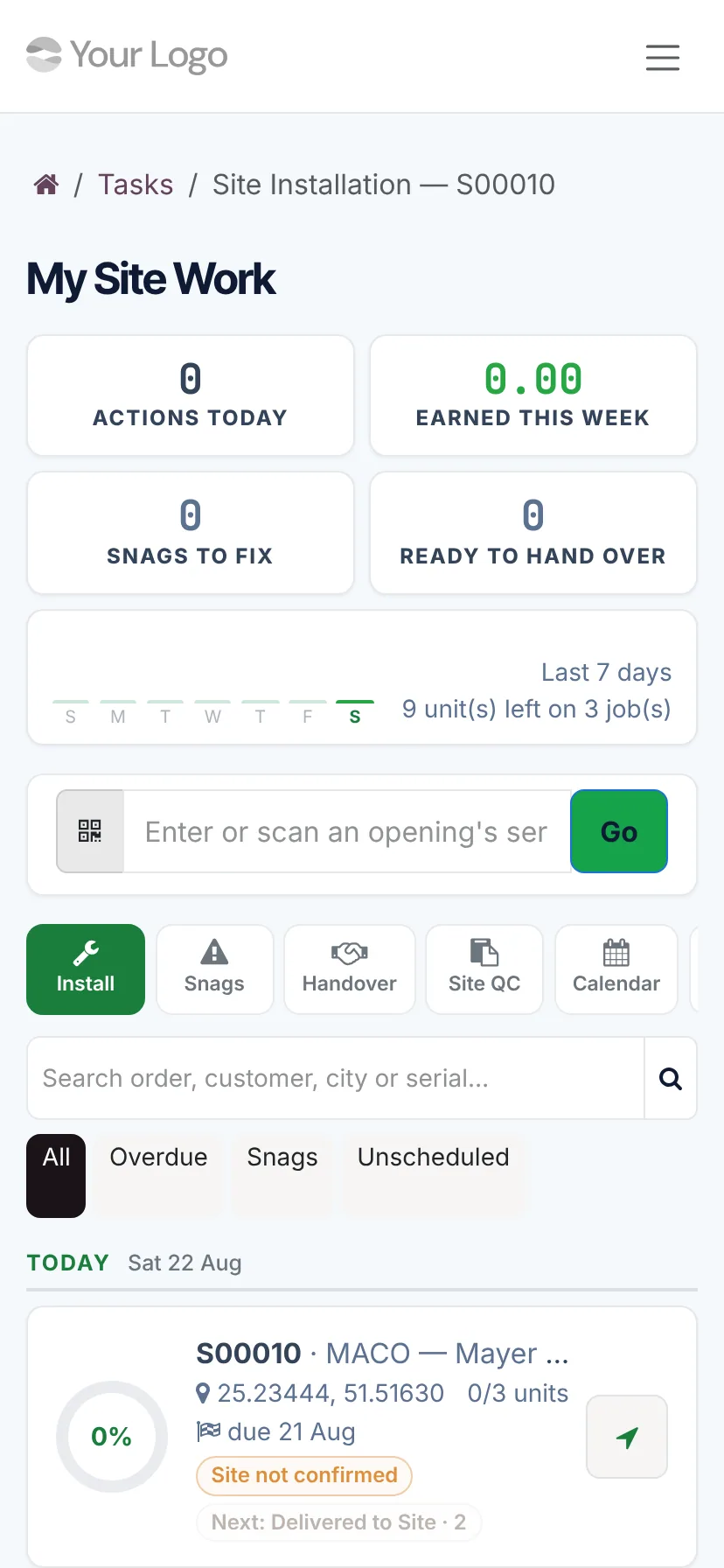
The fitter gets an app, not a phone call.
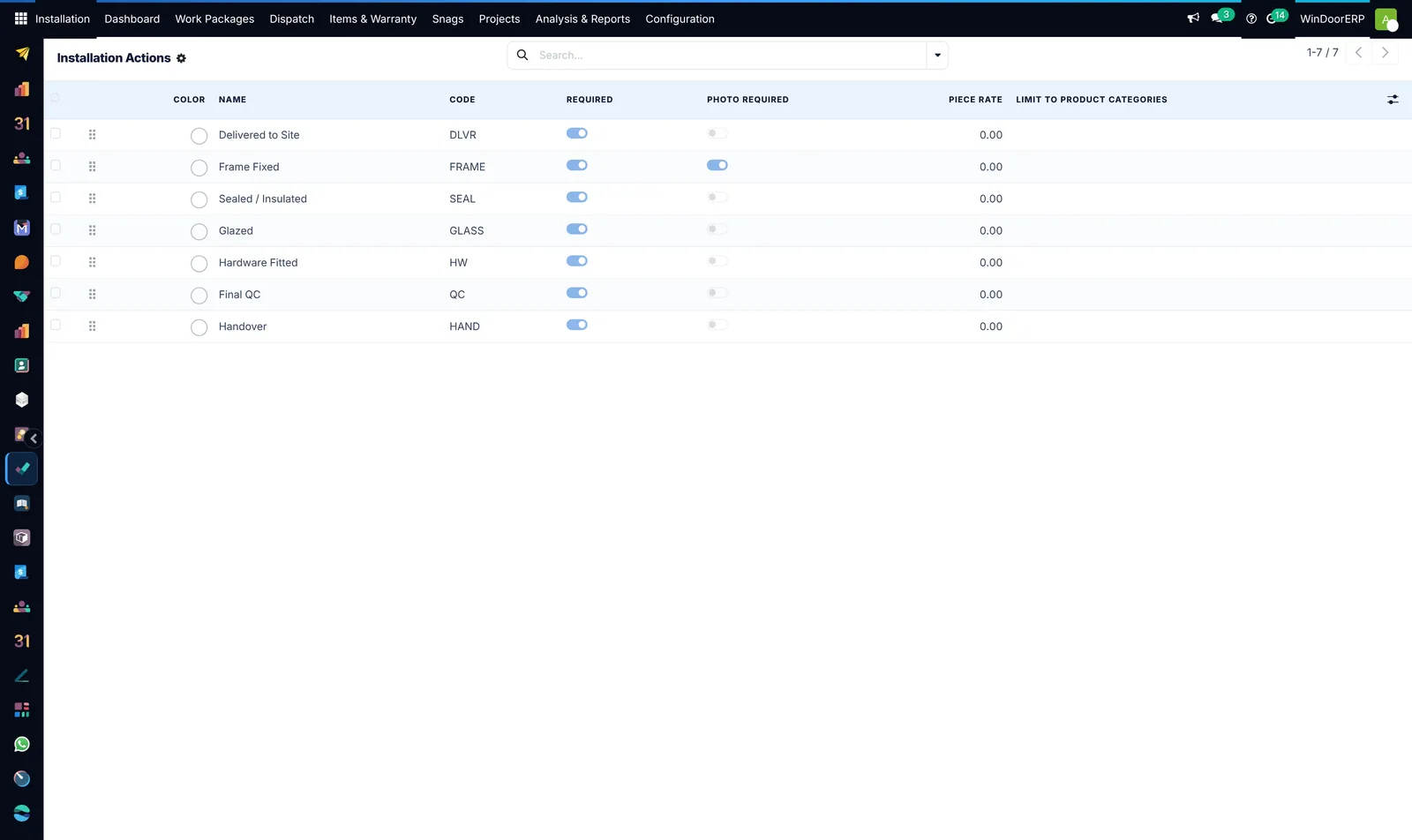
Every unit walks through the stages you defined — delivered, frame fixed, sash hung, sealed, cleaned — with a photo where the stage demands one. It installs to the home screen, keeps working when the site has no signal, and sends everything up when it does.
What the office gets back
- Progress per unit, not per site — so a part-finished job is measurable
- Photo evidence on the stages you decided need it
- Location and timestamp on the tick, not on a text message
- An evening brief to each crew for the following day
- A funnel from sold to surveyed to produced to delivered to installed
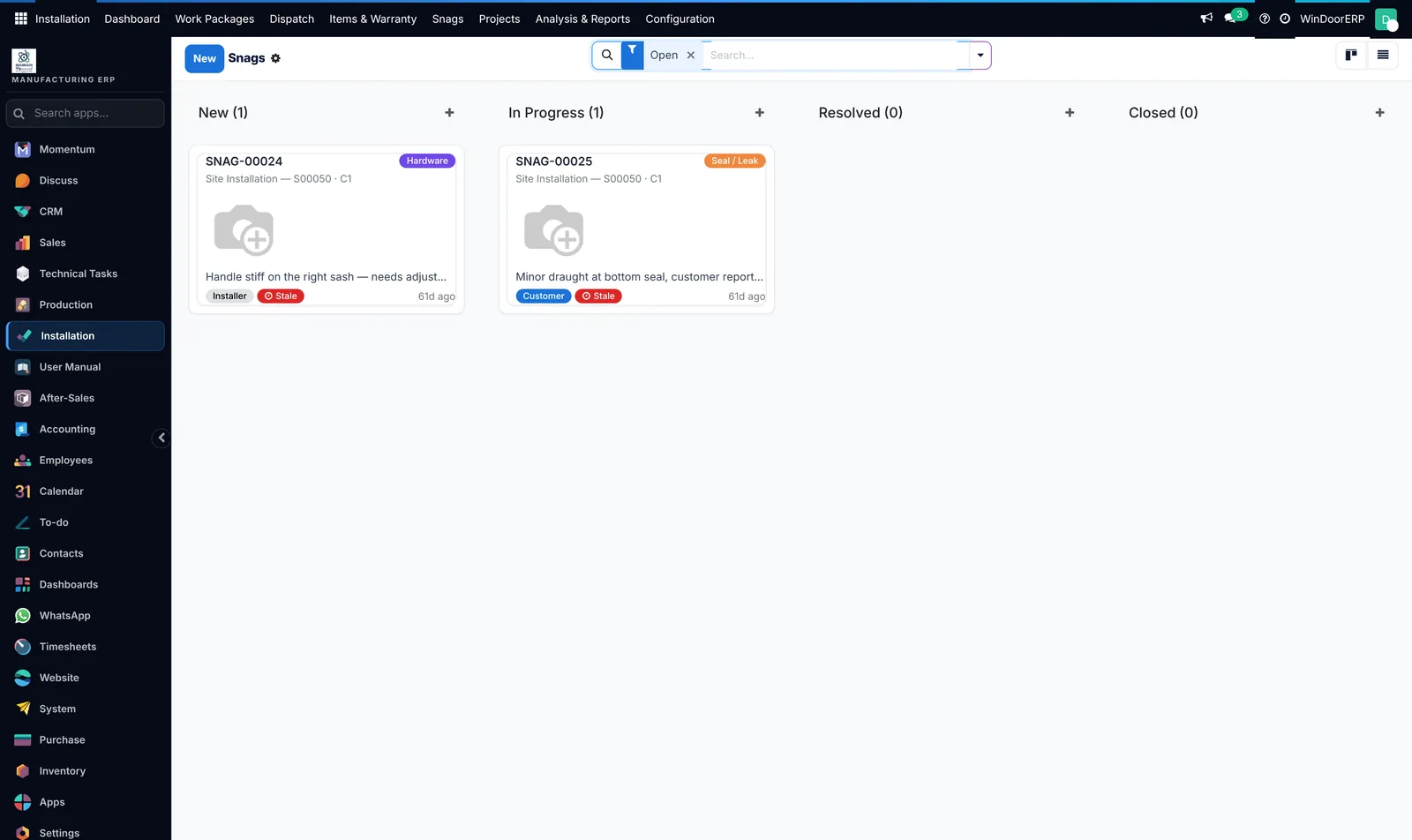
A snag blocks the handover. That is the whole mechanism.
Site checks are authored by the office from the front end — the questions, the guidance for the inspector, the tolerances, the severity and who gets told. A failed check raises a snag against the unit, and an open snag stops the job being signed off. No second enforcement system that nobody looks at.
Measured, not judged
A check can require a measurement and compare it to a tolerance, so pass and fail are decided by the number rather than by the mood of the inspector.
In the inspector's language
Questions and guidance are translatable, so the same checklist can be read in English by the office and in Arabic on the scaffold.
Signed on the phone
Handover is a signature captured on site against a job with no open snags — and the warranty clock starts from that moment.
The engine is configured on the demo but no inspection has been run against it yet — run one and capture both the result and the snag it raises.
The one image that makes the whole handover story land. Needs a real site visit and a camera.
A call in year three about a stiff handle.
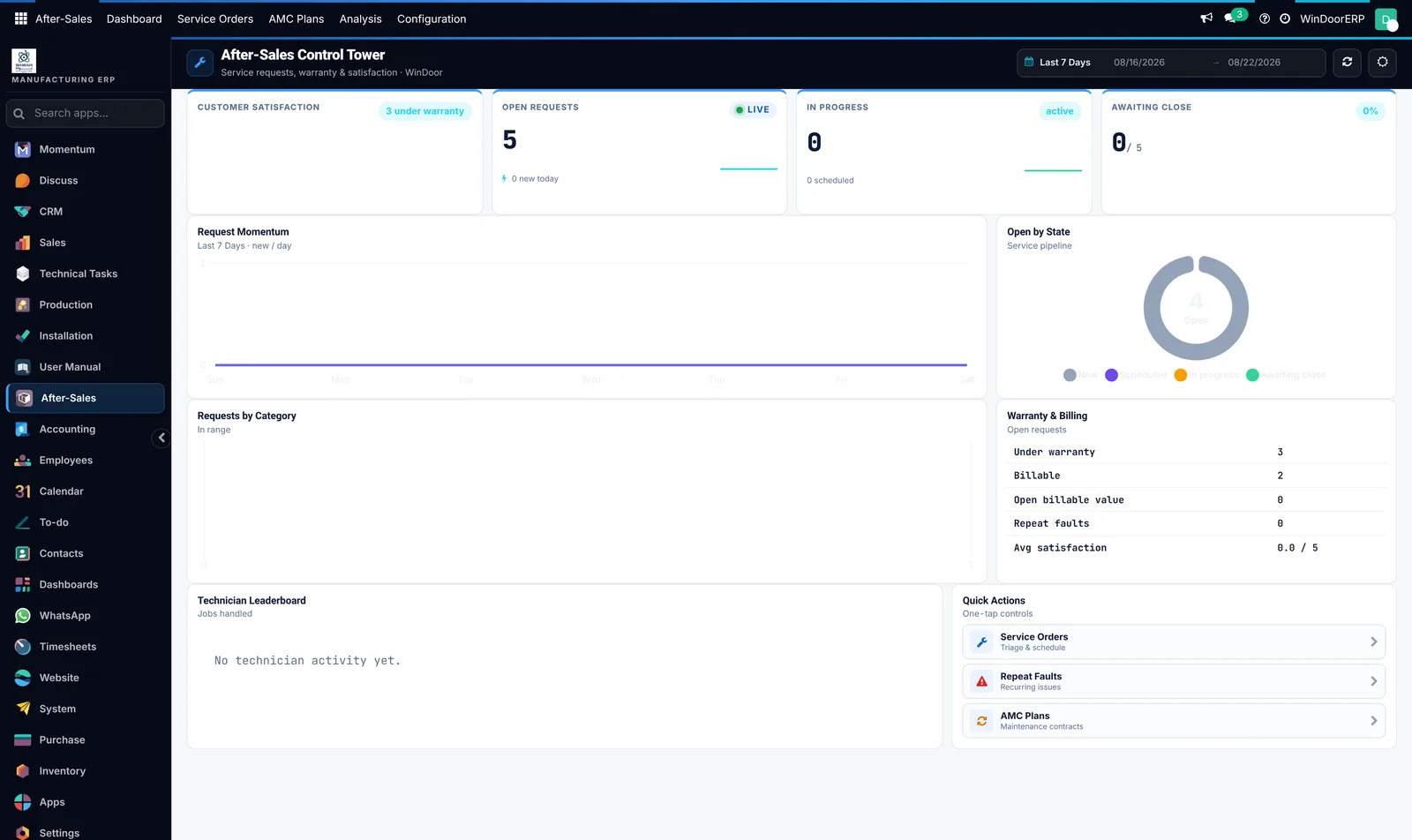
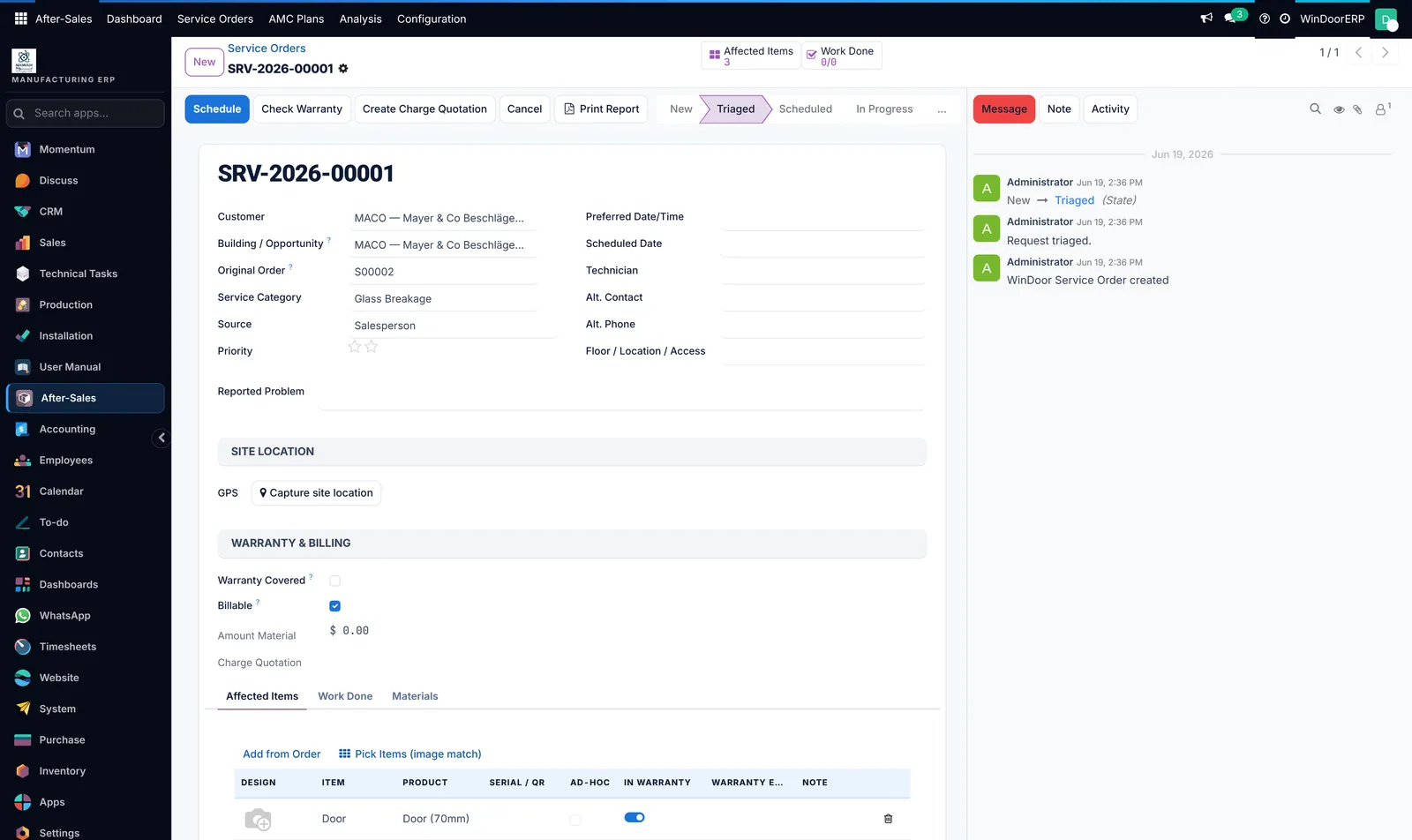
The service order already knows which unit, which order, which crew fitted it, which hardware set is in it and whether it is still covered. So the technician turns up with the right part instead of a notebook — and the visit is billed, or not billed, correctly.
Warranty per serial
Registered at handover against the unit itself, so cover is a fact rather than a search through emails.
Triage before dispatch
A request is categorised and prioritised before anybody drives, so a broken handle does not get a two-man crew.
Materials consumed
The parts used on the visit come off stock and land on the bill — or on the warranty account.
Maintenance contracts
Annual plans that schedule their own visits, so the second sale to an existing customer takes care of itself.
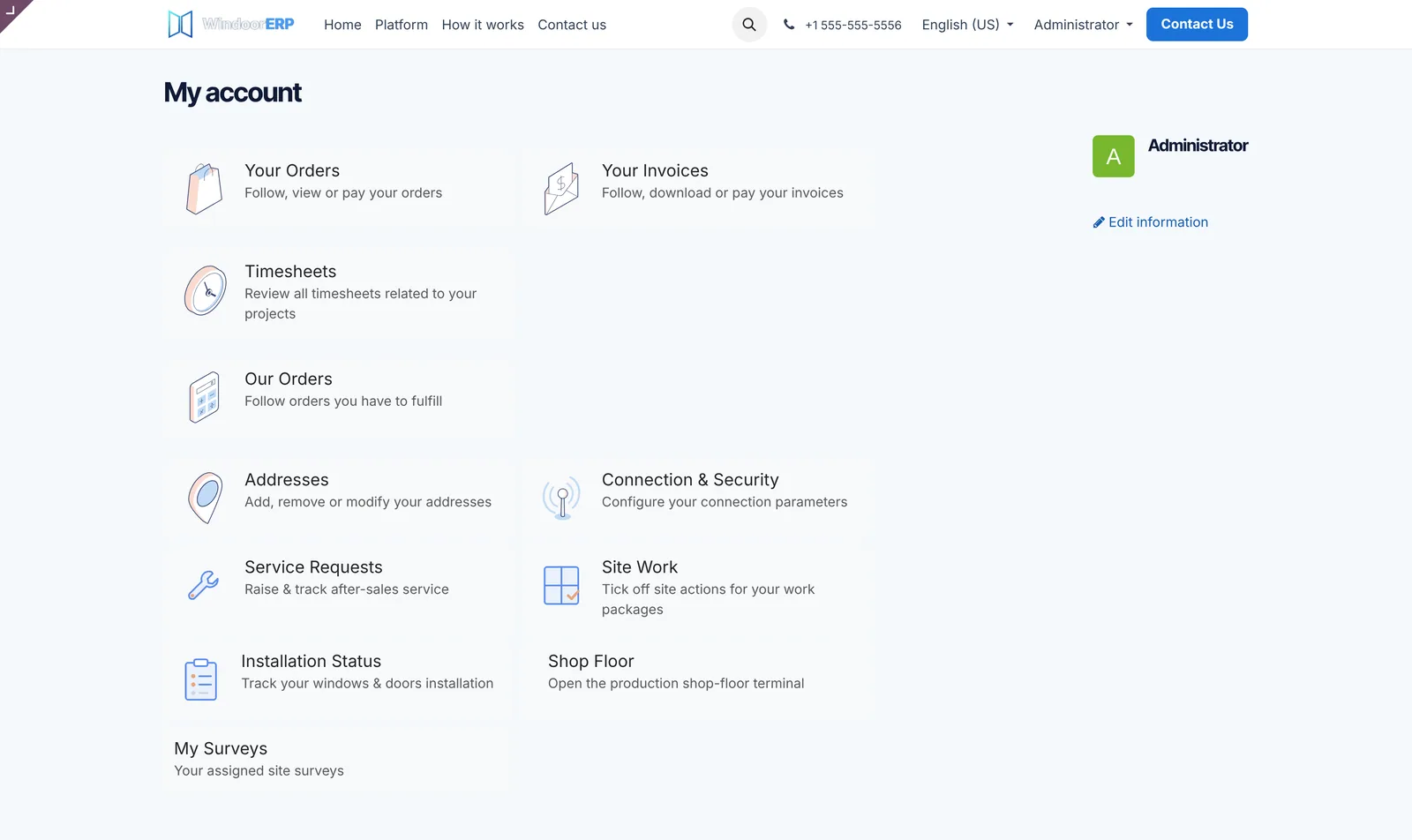
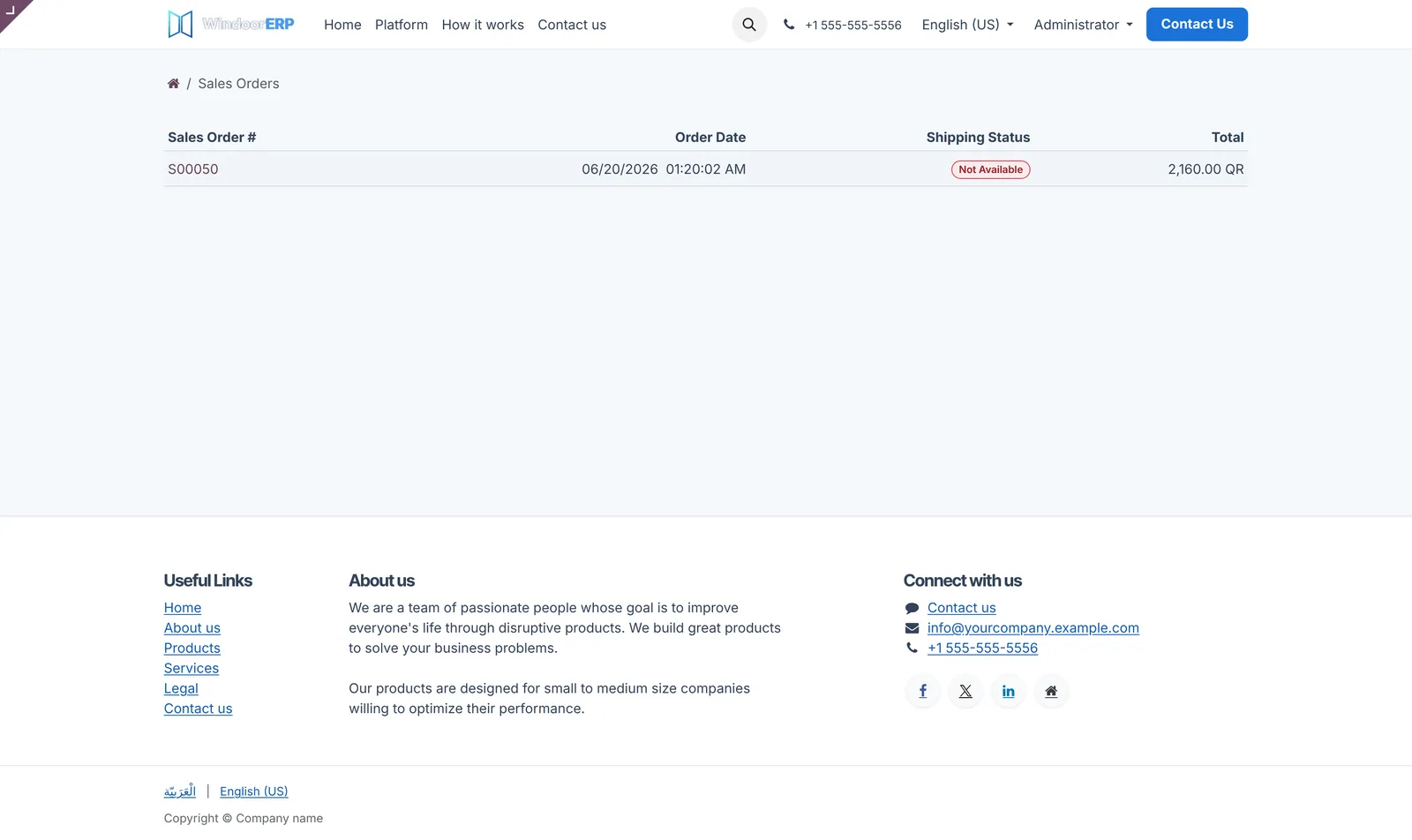
One door for everyone who is not on the payroll.
Customers, surveyors, fitters and machine operators all get a login — and each of them sees only what they are allowed through. None of them consume an internal licence.
Stop reading about it.
Open the system.
We will run your own workflow through a live tenant — your profile system, your glass spec, your paper size, your currency — and hand you the mouse. Bring one real job and we will take it from enquiry to invoice in front of you.
45–60 minutes · no slides · run on a real database · English or Arabic