Every profile, pane and hinge is a stock item — and every finished unit is a serial.
Profiles, glass and hardware are stock, and the finished units are serials. The store runs on Odoo's warehouse, with the parts a window factory needs that a general warehouse does not have.
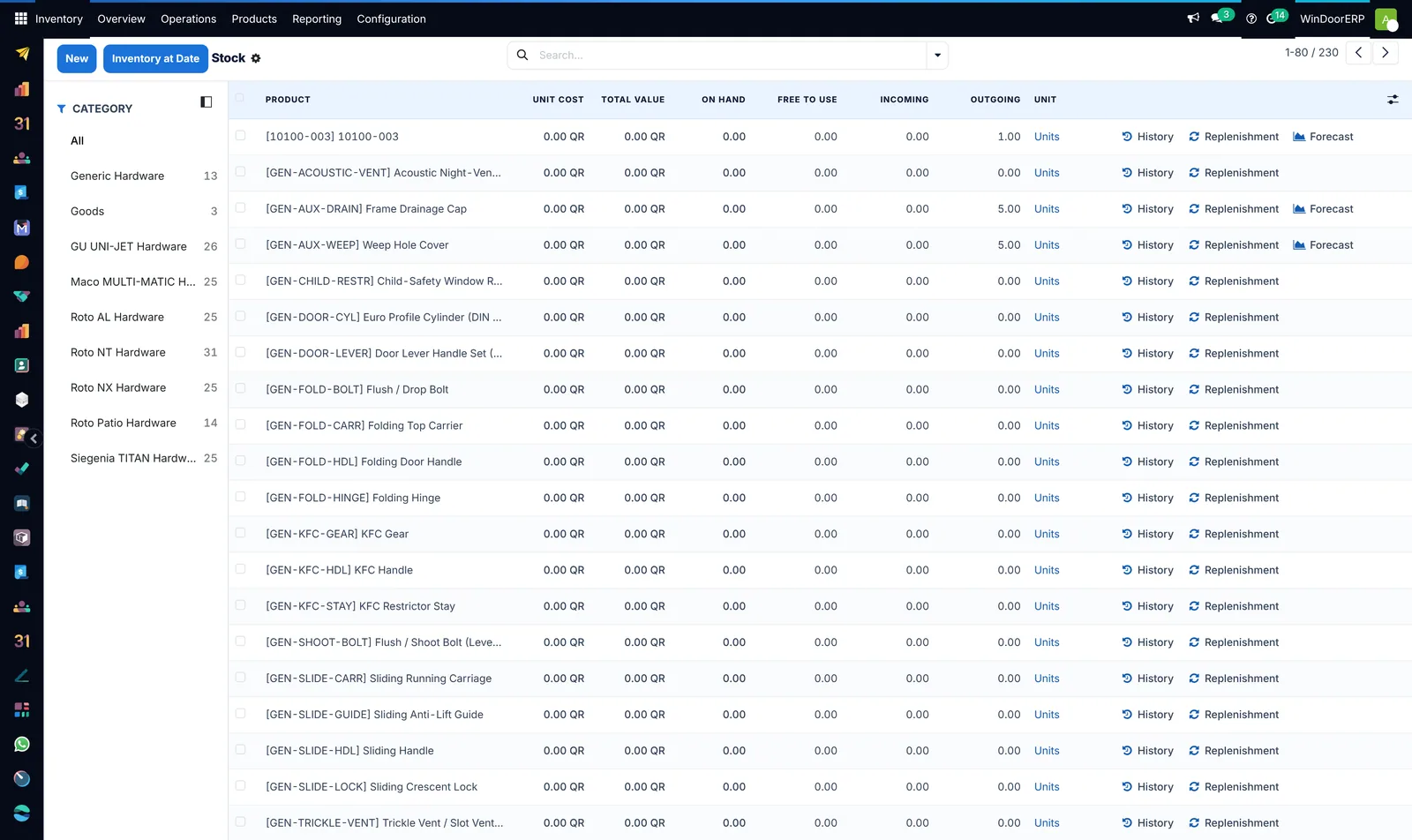
Stock as it stood on any date
- Inventory at a date, computed by rewinding the moves rather than by keeping a snapshot
- Valuation with unit cost and total value per product
- Moves history and moves analysis for the audit that follows
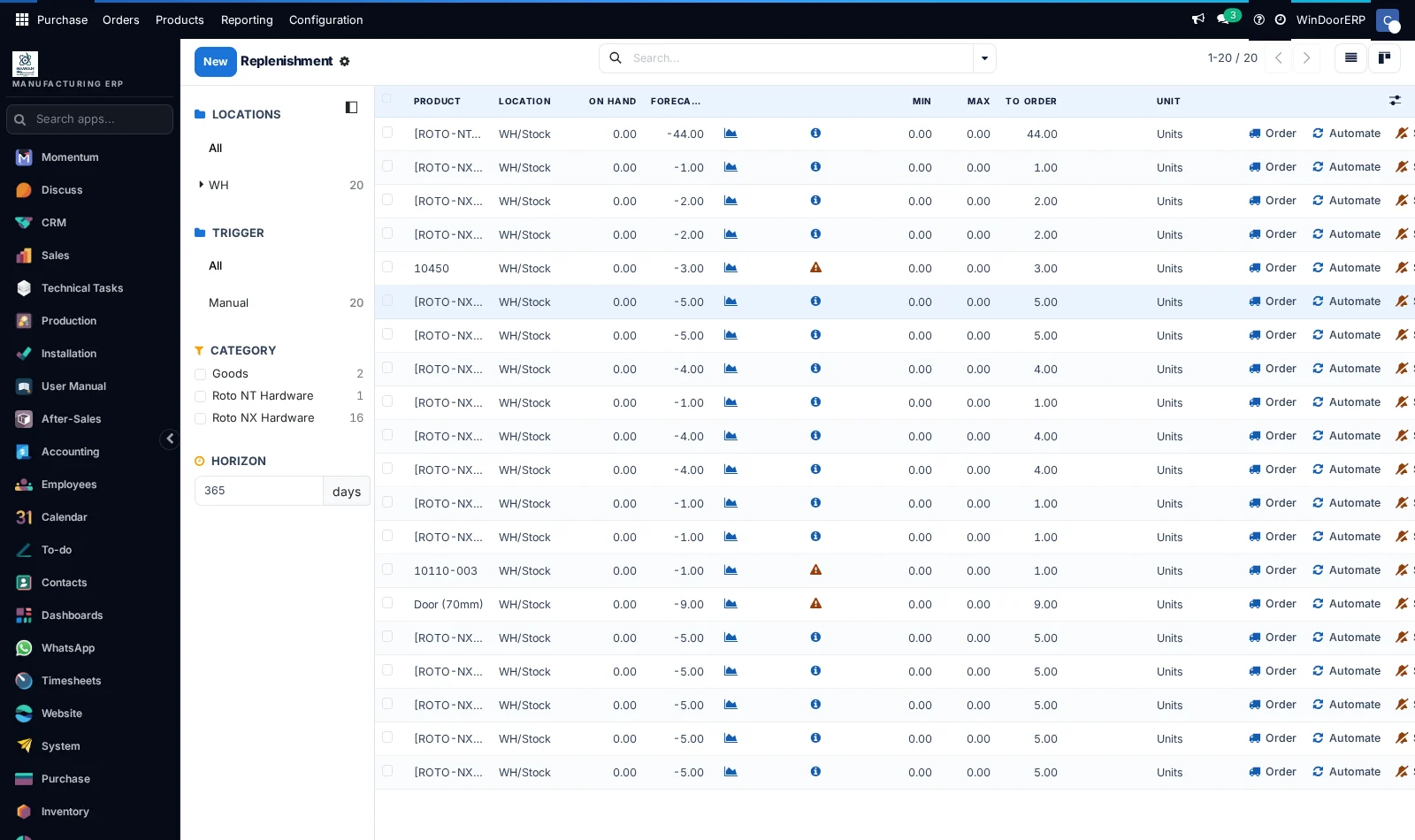
Replenishment, forecast and the usual warehouse machinery
- Reordering rules with minimum and maximum, and a forecast that accounts for demand
- A replenishment view that proposes what to buy
- Multi-step routes, putaway rules and storage categories when you need them
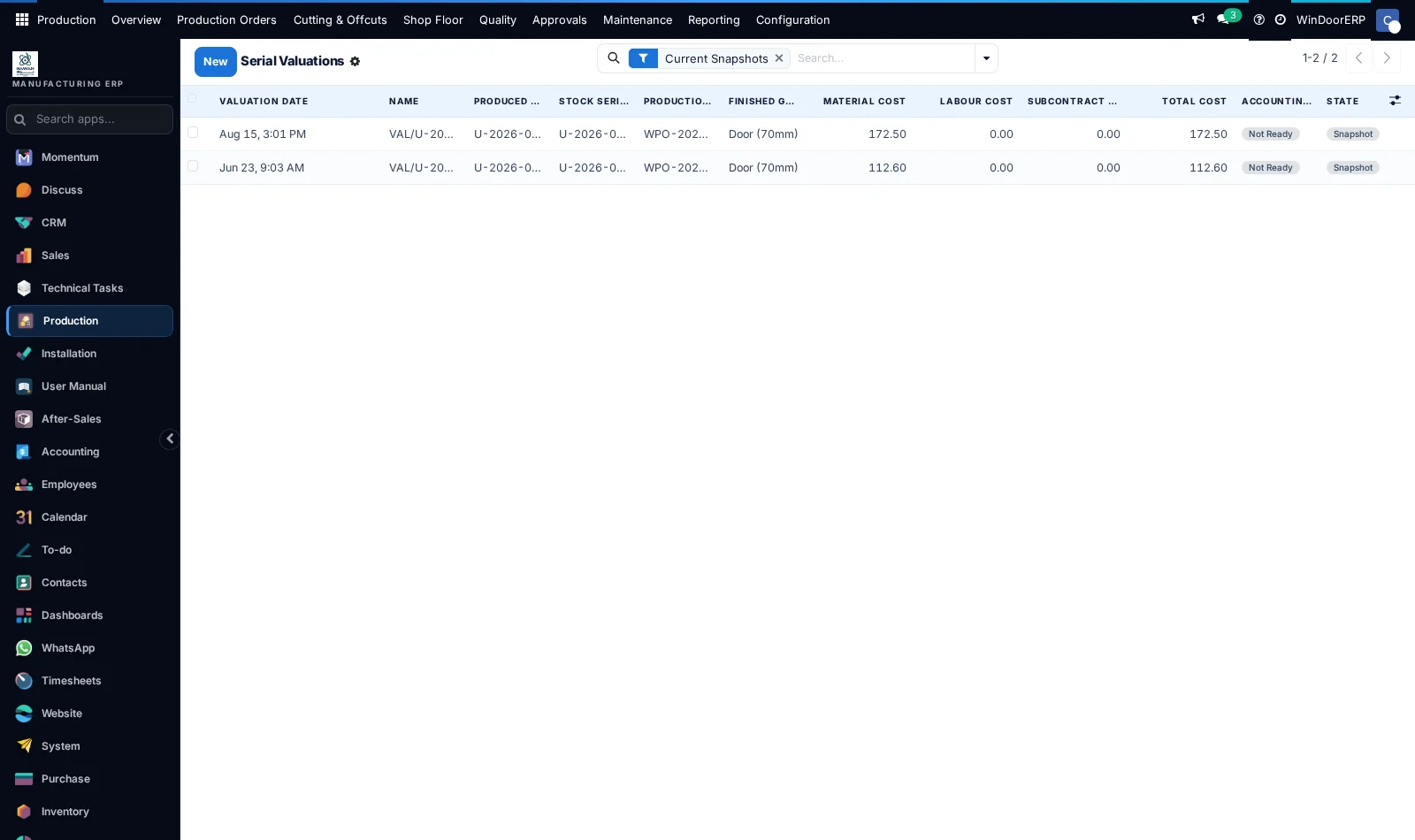
Cost that follows the individual unit
- A serial per finished unit, linked back to the production order that made it
- Material, labour, subcontract and overhead recorded against that serial
- Finished units received into stock through a real transfer, not a status change
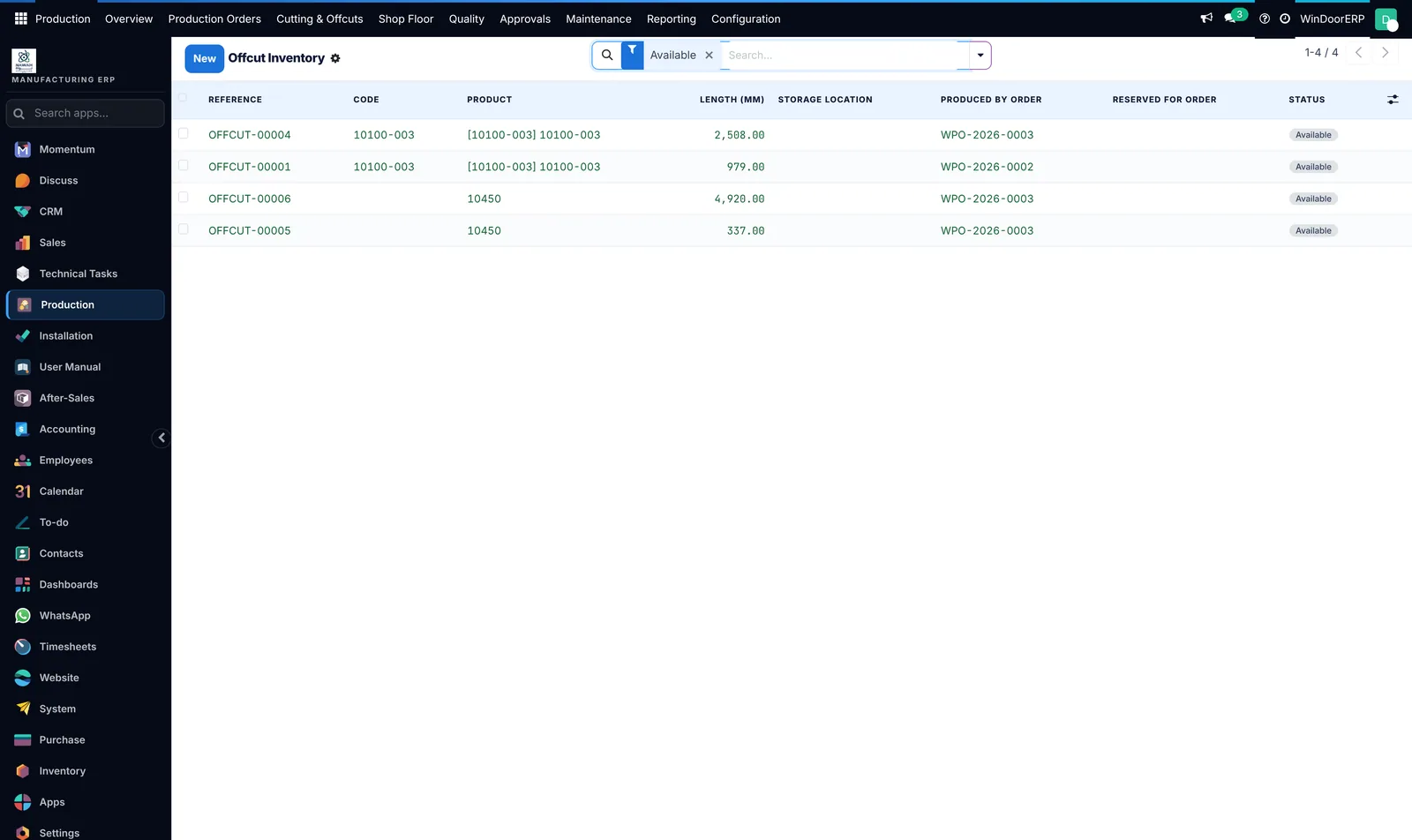
A shelf of off-cuts the next job checks first
- Remainders above your reusable threshold recorded with their length and origin
- Available, reserved, consumed or scrapped
- The optimiser draws from that shelf before it opens a fresh bar
The numbers on the wall
Odoo's stock reporting — Stock, Locations, Moves History and Moves Analysis — plus the Warehouse Metrics spreadsheet dashboard. No custom inventory dashboard ships today.
What it produces
Bring one opening.
We will run it end to end.
A drawing, a profile system, or a quotation you have already sent. We load your catalogue into a live tenant and take it from the measured opening to a priced quotation, a costed material list, a nested cut list and a production record — with your hands on the mouse.
45–60 minutes · no slides · on a live database · English or Arabic · we reply within one business day