A routing graph, a finite-capacity scheduler, and a simulator you can run before you buy the machine.
A window factory is not a line, it is three streams that meet at glazing. Planning here works on that shape rather than pretending the floor is a queue.
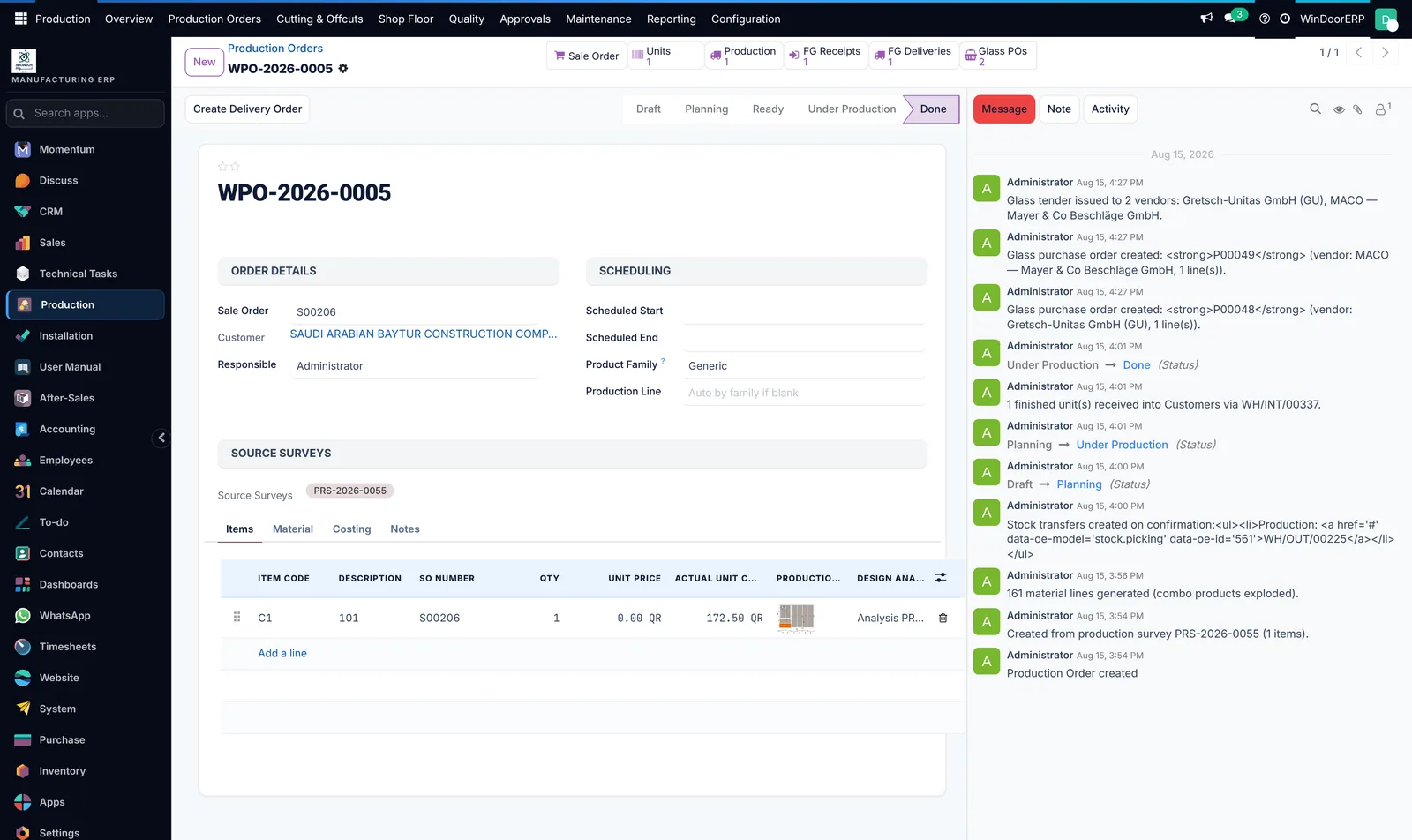
Work orders from a routing graph
- Frame, sash and glass run in parallel and converge where they physically must
- Planned minutes from the work centre's own capacity, not a flat estimate
- An order cannot be confirmed without an approval and a material list
- An order cannot be closed while a work order is still open
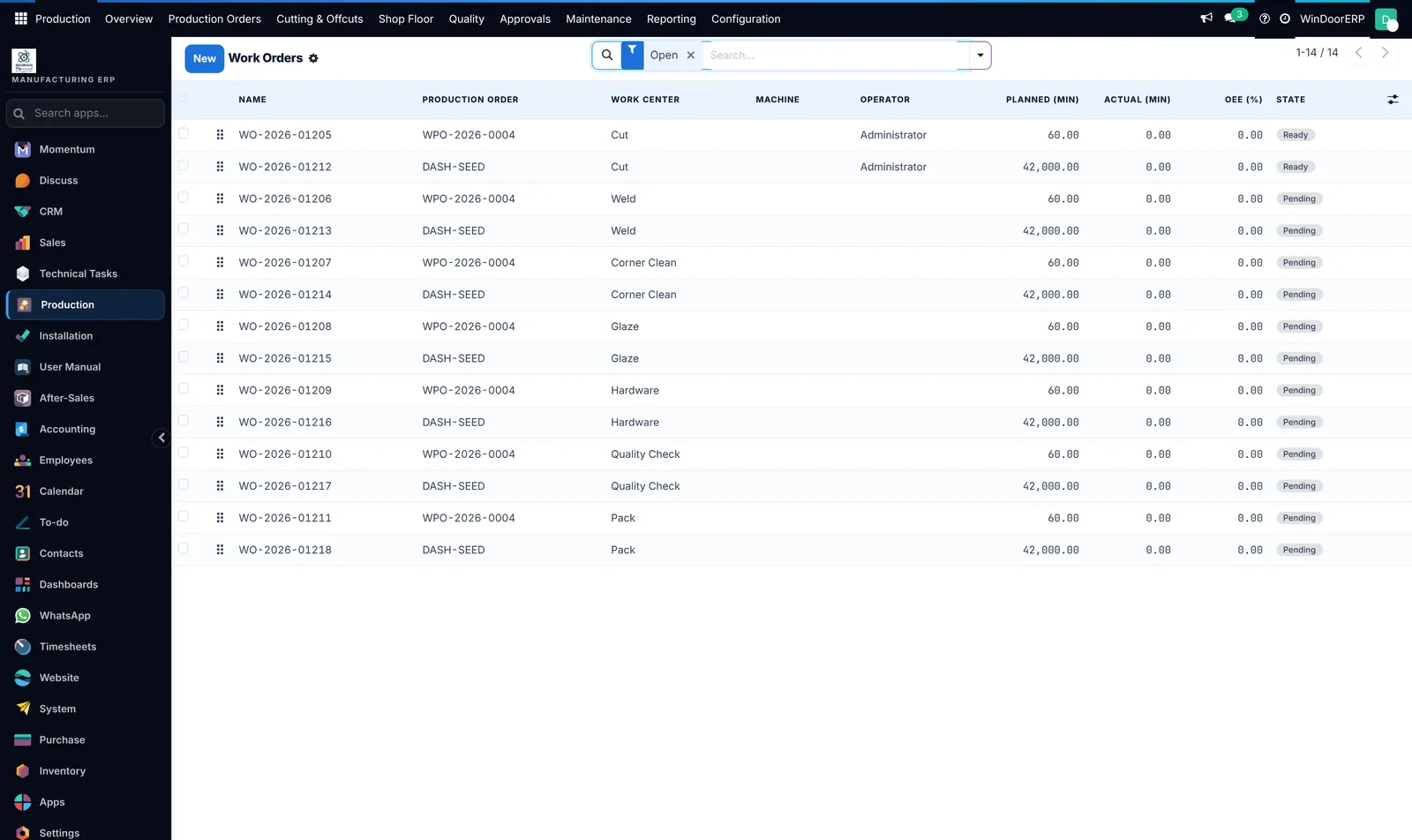
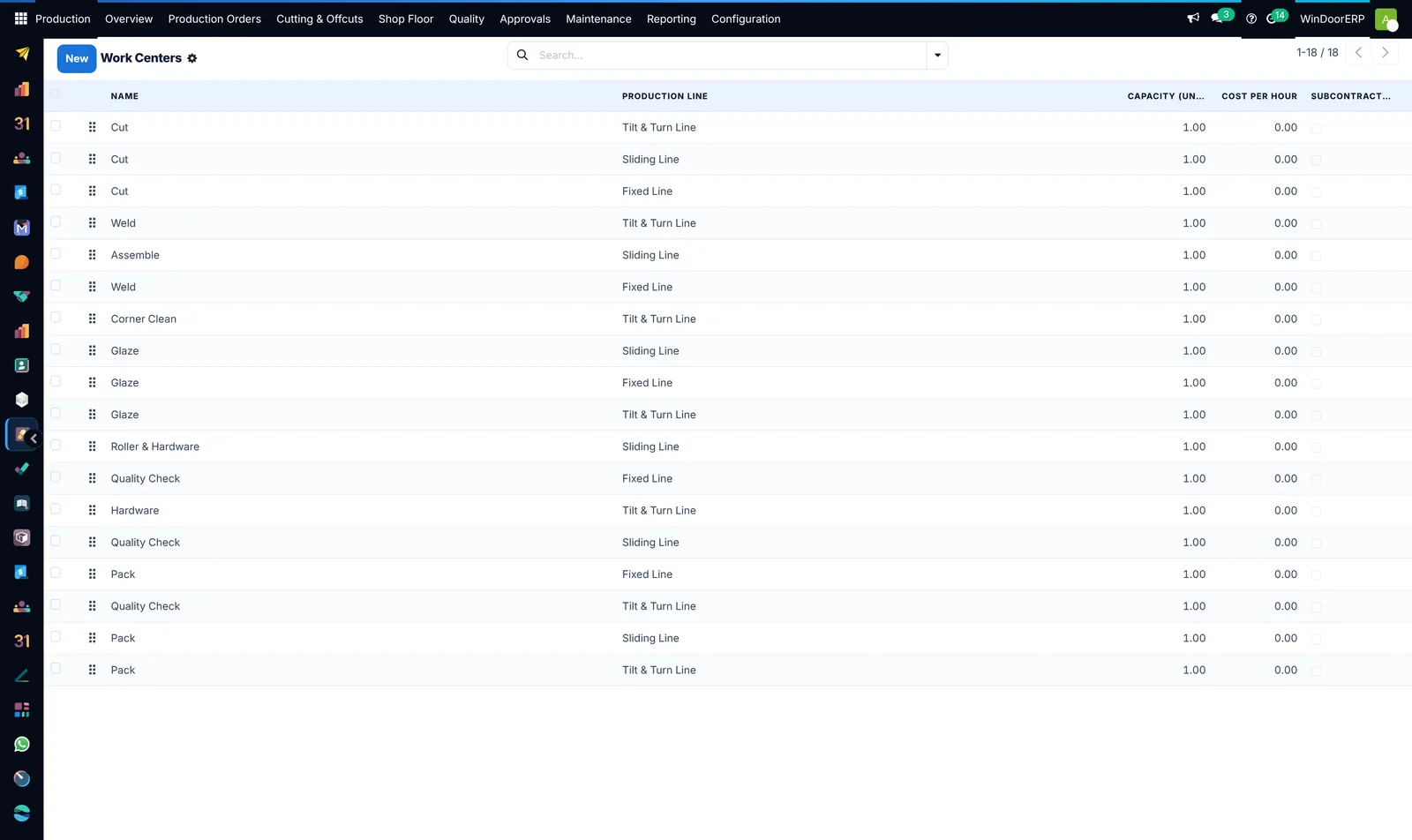
Finite capacity, across orders rather than within one
- Each operation starts after its predecessors and after the machine is free
- Two orders contend for the same work centre instead of quietly overlapping
- Level every ready order together and see how many operations were placed
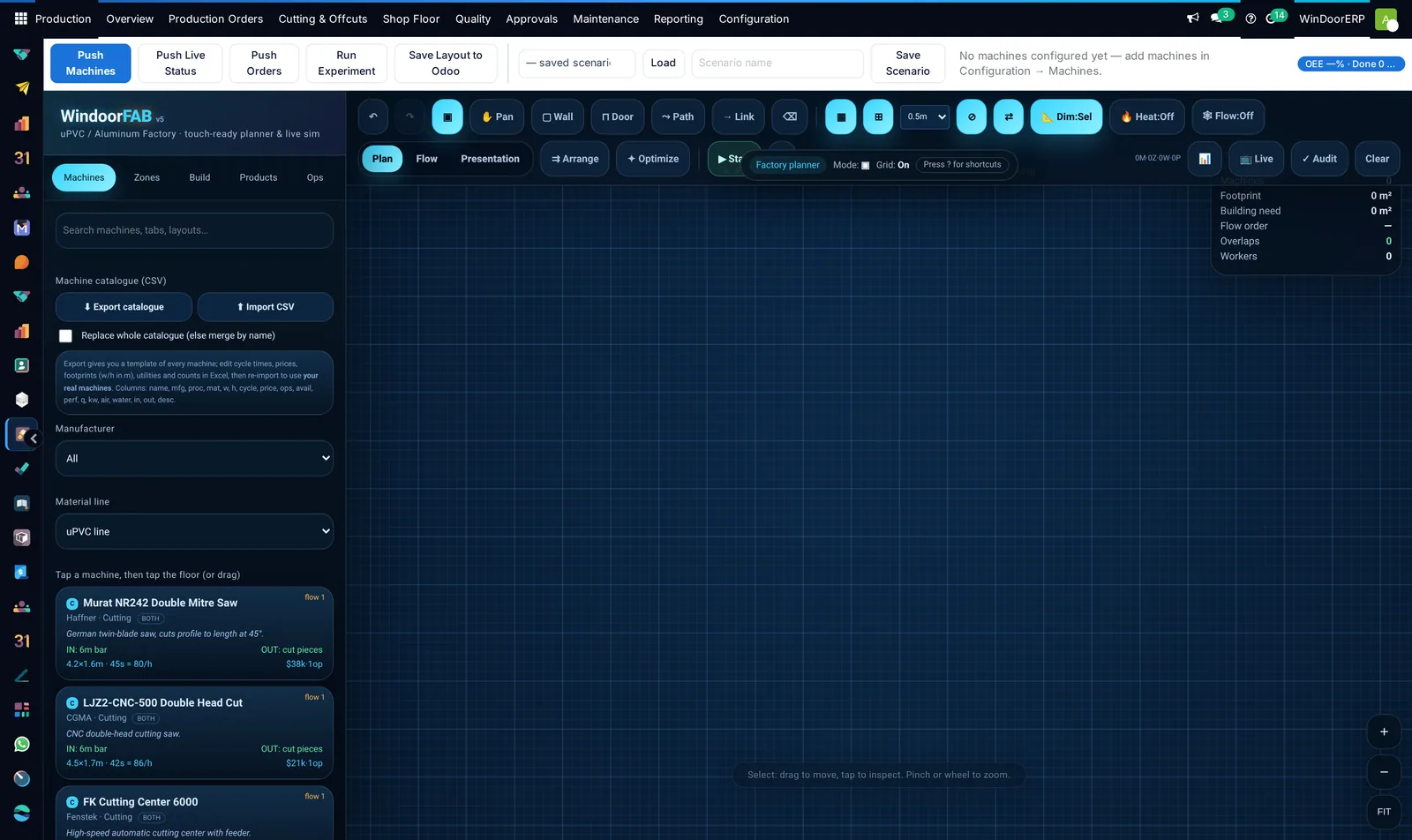
Try the change before you make it
- A floor planner fed with your real machines, their positions and your open order book
- Run an experiment: throughput per day and OEE, with confidence intervals
- Saved scenarios, so 'what if we bought the second welder' is a record rather than an argument
The numbers on the wall
The live factory overview — machines running and down, work in progress, average OEE, packages ready, print queue, energy drawn — and the Factory Planner itself.
What it produces
Bring one opening.
We will run it end to end.
A drawing, a profile system, or a quotation you have already sent. We load your catalogue into a live tenant and take it from the measured opening to a priced quotation, a costed material list, a nested cut list and a production record — with your hands on the mouse.
45–60 minutes · no slides · on a live database · English or Arabic · we reply within one business day